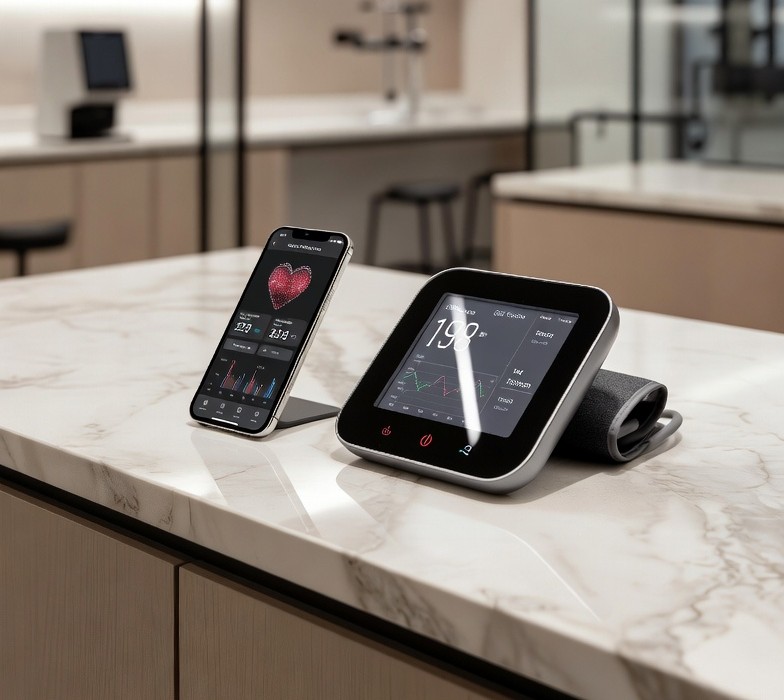
High blood pressure is often referred to as the “silent killer,” but in the longevity community, we prefer to call it the “silent decelerator.” Elevated pressure, even slightly above the optimal 115/75 mmHg, places constant mechanical stress on your vascular system, leading to arterial stiffness, kidney strain, and cognitive decline over decades. Owning a blood pressure monitor for longevity has become a must-have for any biohacker.
In 2026, relying on a single reading in a stressful doctor’s office (“White Coat Hypertension”) is outdated. To truly optimize your healthspan, you need a clinically validated home blood pressure monitor to capture your “true” baseline across different times of the day and lifestyle stressors.
We also recommend checking out our guide to Why You Need “Flicker-Free” Bulbs for Longevity.
Table of Contents
Affiliate Disclosure: As an Amazon Associate, we may earn a commission from qualifying purchases at no additional cost to you.
The Science: Pressure as a Proxy for Aging
Blood pressure is a direct reflection of your vascular age. When your heart has to pump against high resistance, it undergoes structural changes (left ventricular hypertrophy) that reduce its long-term efficiency.
- Vascular Integrity: Chronic high pressure causes micro-tears in the endothelium (the lining of your arteries), which is the first step toward atherosclerosis.
- Organ Protection: Your brain and kidneys are highly pressure-sensitive. Maintaining optimal BP is one of the most effective ways to prevent small-vessel disease in the brain, a leading cause of age-related dementia.
- Real-Time Biofeedback: Monitoring with a blood pressure monitor for longevity allows you to see how your morning espresso, a high-sodium meal, or a stressful Zoom call impacts your physiology in real-time.
The “Digital Twin”: Integrating Data into Your Health Stack
A single high reading isn’t a diagnosis; it’s a data point. The most successful longevity seekers use their home monitors to build a “Digital Twin” of their cardiovascular system. By syncing your blood pressure monitor for longevity to platforms like Apple Health, Google Fit, or InsideTracker, you can cross-reference your blood pressure with other key biomarkers.
- Correlation with HRV: Discover if a low Heart Rate Variability (HRV) score in the morning predicts higher blood pressure in the afternoon.
- Sodium Sensitivity: Use your monitor to determine if your body is “salt-sensitive” by tracking readings after high-sodium meals versus low-sodium days.
- The Sleep Link: High morning blood pressure (morning surge) is often a hidden indicator of poor sleep quality or undiagnosed sleep apnea. Integrating this data allows you to pivot your protocol in real-time.
Top-Rated Home Blood Pressure Monitor for Longevity (2026)
When selecting a monitor, clinical validation and data integration are paramount. You want a device that doesn’t just give a number, but helps you track trends over months and years.
1. The All-in-One Powerhouse: Omron Complete (BP7900)

The Omron Complete is the ultimate tool for cardiovascular surveillance. It combines a medical-grade blood pressure monitor with a single-lead EKG, enabling you to check for irregular heartbeats, such as AFib, simultaneously.
- The Benefit: It provides a comprehensive picture of heart health, identifying risks that a standard monitor would miss.
- Best For: Longevity seekers who want a “pro-grade” lab experience at home.
2. The Ecosystem Expert: Garmin Index BPM

For those already using the Garmin ecosystem for sleep and activity tracking, the Garmin Index BPM is the perfect addition. It syncs directly to your Garmin Connect account via Wi-Fi.
- The Benefit: It allows you to see your blood pressure trends alongside your sleep data, heart rate variability (HRV), and exercise load.
- Best For: Data-driven biohackers who want all their longevity metrics in one single dashboard.
3. The Design Leader: Withings BPM Vision

The Withings BPM Vision is a sleek, tabletop blood pressure monitor for longevity that prioritizes ease of use and immediate feedback with a large, bright LCD screen.
- The Benefit: It offers color-coded results based on American Heart Association guidelines, making it incredibly intuitive to see if your readings are in the “green zone.”
- Best For: Users who value a clean aesthetic and effortless Wi-Fi syncing to a world-class health app.
The Longevity Protocol: Getting Accurate Data
To get “clean” data that truly reflects your cardiovascular health, follow the Rule of 5s:
- Rest: Sit quietly for 5 minutes before taking a reading.
- Position: Feet flat on the floor, back supported, and arm at heart level.
- No Stimulants: Avoid caffeine, nicotine, or exercise for at least 30 minutes prior.
- Consistency: Take two readings (1 minute apart) in the morning and two in the evening for one week to establish your true baseline.
Beyond the Arm: The Rise of Wearable BP Tech
While the inflatable bicep cuff remains the clinical gold standard, 2026 has introduced “cuffless” technology that allows for 24/7 monitoring. Devices like the Aktiia Bracelet or the Samsung Galaxy Watch 7 (using PPG sensors) provide a “bridge” between your formal morning measurements.
- Continuous Monitoring: These wearables capture blood pressure during sleep and high-stress moments, identifying “nocturnal dipping” patterns that are highly predictive of long-term heart health.
- Validation is Key: For longevity, never rely solely on a wearable. Use your clinically validated home blood pressure monitor for longevity, whether it’s the Omron Complete or Withings BPM Vision, twice a week to “calibrate” your wearable and ensure the data remains accurate.
Conclusion: Owning Your Cardiovascular Future
You cannot manage what you do not measure. A home blood pressure monitor for longevity is a foundational piece of equipment for any longevity lab, providing the early warning signs needed to adjust your diet, exercise, or supplementation before permanent damage occurs. In 2026, the goal isn’t just to “not have hypertension,” it’s to maintain youthful vascular pressure for as long as possible.
Was this article helpful? Read one of these next:
Leave a Reply