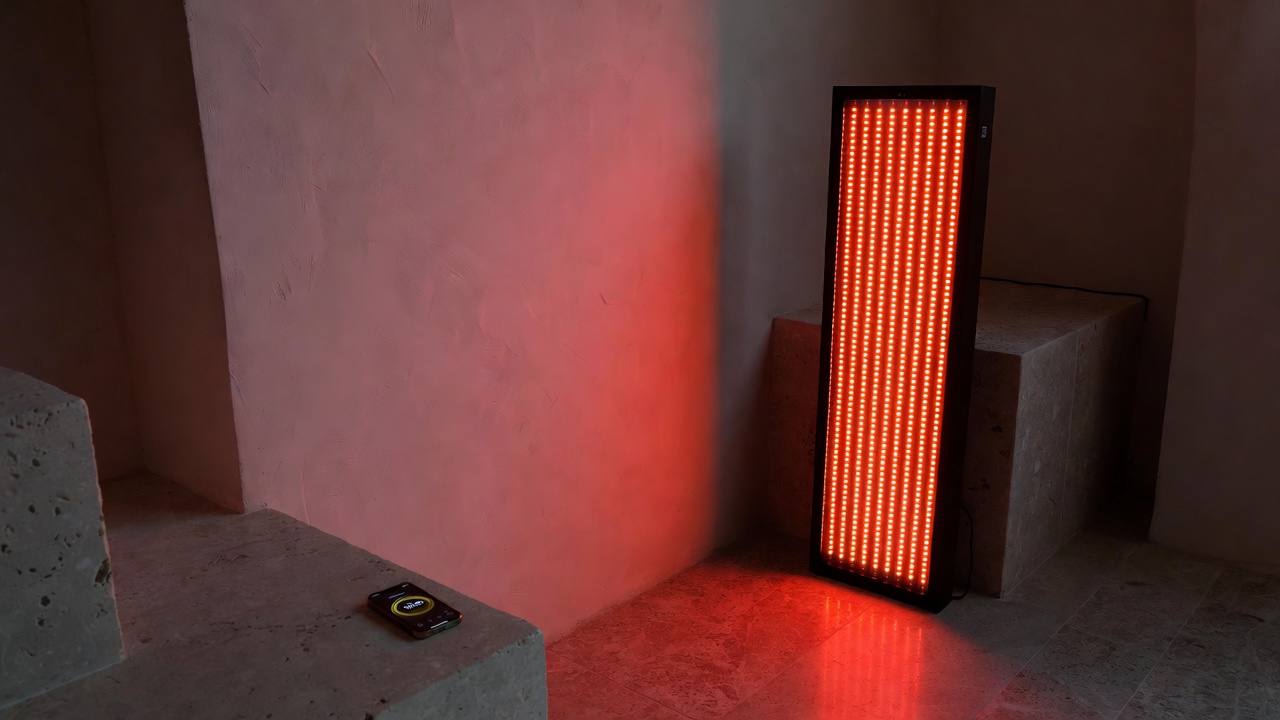
If you could “charge” your cells like a smartphone, would you? In 2026, the longevity community recognizes light not just as a way to see, but as a fundamental nutrient. Red Light Therapy (RLT), or Photobiomodulation (PBM), is the process of using specific wavelengths of light, typically 660nm (Red) and 850nm (Near-Infrared), to stimulate cellular repair and energy production.
For the dedicated longevity seeker, the goal is simple: mitochondrial optimization. By exposing your skin to the best full-body red light panels under $1,500, you are directly influencing the Cytochrome C Oxidase enzyme, which helps your mitochondria produce more Adenosine Triphosphate (ATP). This results in faster recovery, reduced inflammation, and enhanced skin vitality.
While high-end clinical setups can cost upwards of $5,000, you don’t have to break the bank to build a world-class home longevity lab. We have identified the best full-body panels that offer professional-grade irradiance and coverage for under $1,500.
We also recommend checking out our guide on Why You Need “Flicker-Free” Bulbs for Longevity.
Table of Contents
Affiliate Disclosure: As an Amazon Associate, we may earn a commission from qualifying purchases at no additional cost to you.
The Science: Why Red Light is the Ultimate Longevity Hack
To understand why you need one of the best full-body red light panels under $1,500, you must understand the Biphasic Dose-Response. Like exercise, light therapy follows a curve: too little light does nothing, while too much light can actually inhibit cellular function. The “Goldilocks Zone” is where the magic happens.
- Red Light (660nm): This wavelength is absorbed primarily by the skin. It stimulates collagen production, improves wound healing, and reduces the appearance of fine lines—making it a cornerstone of any Skin Longevity protocol.
- Near-Infrared Light (850nm): NIR light penetrates deeper, reaching muscles, joints, and even bones. It is the primary tool for reducing systemic inflammation and accelerating recovery after intense physical training (the Centenarian Decathlon).
- The Mitochondrial Charge: RLT clears Nitric Oxide from the mitochondria, which otherwise blocks oxygen from binding. By clearing this “exhaust,” your cells can process energy more efficiently, leading to a systemic boost in vitality.
The Technical Checklist: What to Look for in a Panel
In 2026, “budget” panels are everywhere, but most are underpowered. To be considered one of the best full-body red light panels under $1,500, it must meet these three criteria:
- Irradiance (>100 mW/cm² at 6 inches): This is the measure of power density. If the irradiance is too low, you have to stand in front of the panel for an hour to see results. A high-quality panel delivers a therapeutic dose in 10–15 minutes.
- Zero EMF (at 6 inches): High-power electronics generate Electromagnetic Fields. You want a panel with high-quality shielding to ensure you aren’t bathing in unwanted radiation while trying to heal your cells.
- Flicker-Free Technology: Cheap LED drivers pulse light, which can cause neurological fatigue and headaches. Longevity-grade panels utilize constant-current drivers to ensure a steady, therapeutic beam.
The Best Full-Body Red Light Panels Under $1,500 Reviews
1. The Performance Leader: Hooga HG1500

The Hooga HG1500 is widely regarded as the “gold standard” for home use. It features 300 individual 5W LEDs, providing a massive coverage area that can treat your entire torso and upper legs at once.
The Verdict: If you want the most “power per dollar” and have the space for a 3-foot panel, this is the best full-body red light panel under $1,500 for your 2026 lab.
The Review: In our testing, the HG1500 delivered a consistently high irradiance of 115 mW/cm² at 6 inches. The build quality is medical-grade, and the inclusion of independent switches for Red and NIR light allows for total customization. It is one of the quietest panels in its class, thanks to its high-efficiency cooling fans.
2. The Wavelength Specialist: Bestqool Pro300

The Bestqool Pro300 takes a more nuanced approach by offering four distinct wavelengths. This allows for a more “full-spectrum” approach to photobiomodulation.
The Verdict: This is the best full-body red light panel under $1,500 for the biohacker who values precision and wants a modular system that can evolve with their needs.
The Review: The Pro300 is FDA-cleared and features a Zero-EMF design at the recommended treatment distance. Its modular interface is a standout feature, allowing you to link multiple panels together as your budget grows. The light output is incredibly stable, and the panel feels significantly more premium than its price point suggests.
3. The Targeted Professional: Lifepro Red Light Therapy Panel

The Lifepro is the perfect entry point for those who want a simple, high-performance experience. It balances power with ease of use through an integrated digital timer and remote control.
The Verdict: The best full-body red light panel under $1,500 for those who value convenience and a “set-and-forget” longevity routine.
The Review: The Allegra uses a dual-chip LED system, which ensures a more even distribution of red and NIR light across your body. We found the remote control to be a major quality-of-life improvement, allowing you to adjust settings without having to move away from the panel mid-session.
Advanced Biohacking: Stack RLT with Other Modalities
To truly 10x your results in 2026, consider “stacking” your red light sessions:
- Stack with Berberine: Some research suggests that activating your AMPK pathway with Berberine before a red light session can further enhance mitochondrial efficiency.
- Stack with Grounding: Standing on a grounding mat while using your red light panel can help neutralize oxidative stress more effectively.
- Stack with Heat: Using a PEMF mat with Far-Infrared after your red light session can help “flush” the metabolic waste products released during photobiomodulation.
The Longevity Protocol: Maximizing Your Irradiance
To get the most out of your investment, consistency is key.
- Dose-Response (The Goldilocks Zone): Too little light does nothing; too much light can actually inhibit cellular function. Stick to 10–15 minutes per session.
- Skin Contact: Light follows the inverse square law—it loses power rapidly as you move away. For deep tissue issues (like knee pain), stay 6 inches from the panel.
- Naked Skin: Red light cannot penetrate clothing. For maximum ATP stimulation, the target area must be directly exposed.
Conclusion: Investing in Your Cellular Future
Investing in one of the full-body red light panels under $1,500 is one of the most proactive steps you can take for your long-term healthspan. Whether you choose the massive power of the Hooga HG1500, the spectral precision of the Bestqool Pro300, or the convenience of the Lifepro Allegra, you are giving your cells the energetic foundation they need to thrive well into your marginal decades.
Was this article helpful? Read one of these next:
Leave a Reply