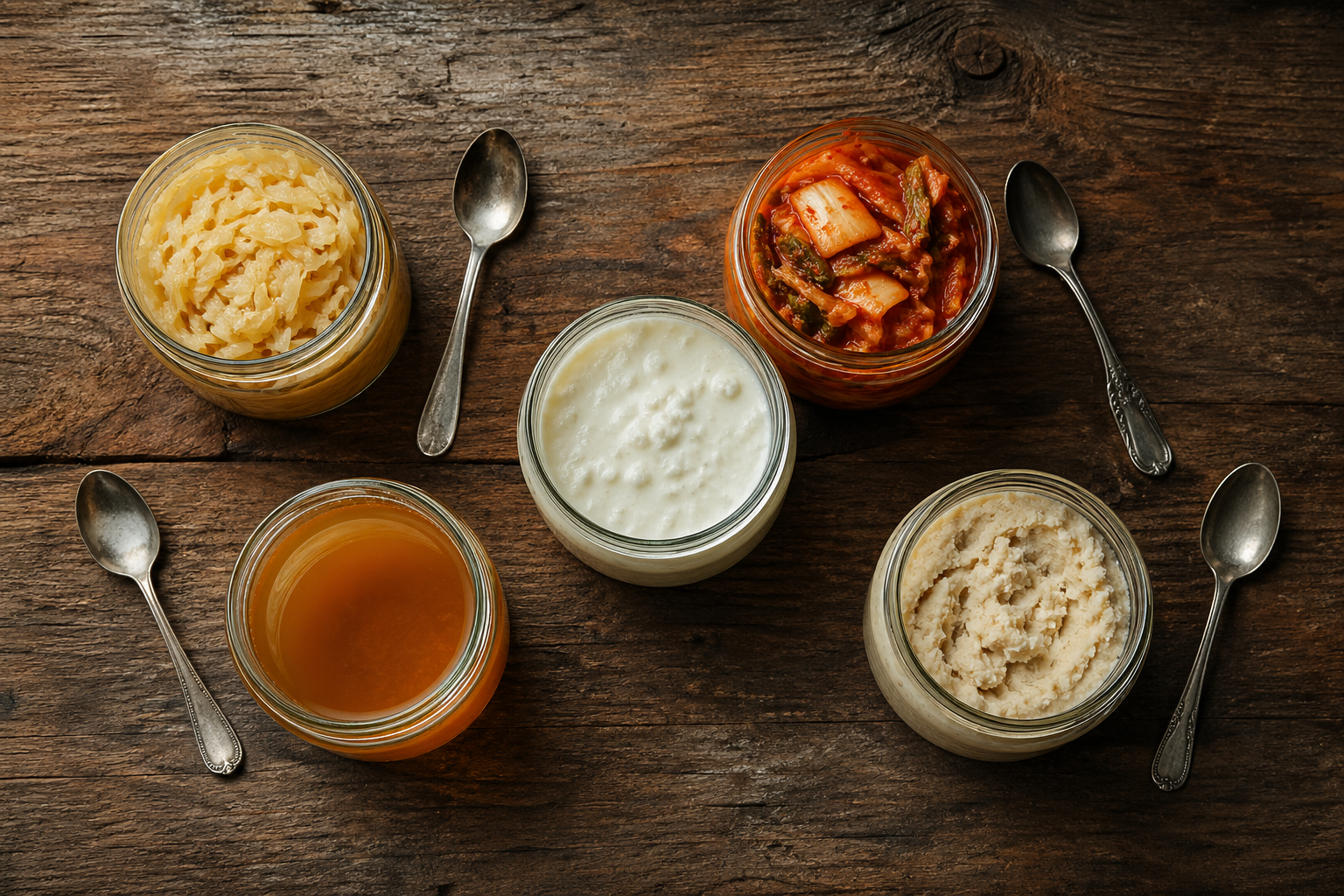
Humans have been fermenting food for at least 10,000 years. The ancient Koreans had kimchi. Romans fermented fish into garum. Nomadic herders across Central Asia carried milk in pouches made from animal stomachs, accidentally discovering kefir when wild bacteria turned the milk into something tangy, shelf-stable, and nourishing. Every culture across every continent developed fermented foods independently, driven by the practical need for preservation.
What those ancient people couldn’t have known is that fermentation was also doing something profound to the food itself: cultivating billions of beneficial microorganisms and producing bioactive compounds that support immune function, reduce inflammation, improve metabolic health, and, as the current research increasingly shows, directly influence how fast we age.
We now have clinical trial data, longitudinal population studies, and mechanistic research telling us that the regular consumption of fermented foods is one of the most impactful dietary interventions available for gut microbiome health and the reduction of chronic inflammation. And we have the tools to make the best fermented foods for longevity at home, consistently and inexpensively, with equipment that costs under $50.
This post covers the science, the foods with the strongest evidence, and the gear you need to start or upgrade your home fermentation practice.
Table of Contents
The Wellness Review participates in the Amazon Associates program. If you purchase through our links, we may earn a commission at no additional cost to you. All product recommendations are editorially independent and evidence-based.
The Science: Why Fermented Foods Matter for Longevity
The most important study on this topic came from Stanford University’s Gardner Lab in 2021, published in the journal Cell. Researchers randomized 36 healthy adults to either a high-fermented-food diet or a high-fiber diet for 10 weeks. The fermented food group consumed an average of 6.3 servings per day of foods including yogurt, kefir, fermented cottage cheese, kimchi, vegetable brine drinks, and kombucha.
The results were striking on two dimensions that matter directly for longevity.
First, microbial diversity increased significantly in the fermented food group but not in the fiber group. Across the full body of evidence, higher gut microbiome diversity is consistently associated with better health outcomes, lower disease risk, and longer lifespan. Centenarian populations studied in blue zones and longevity research consistently show higher microbial diversity and more beneficial bacterial species than age-matched controls, as we covered in our gut microbiome test kit article. The fermented food group in the Stanford trial moved measurably in that direction within 10 weeks.
Second, and perhaps more surprisingly, the fermented food group showed reductions in 19 different inflammatory proteins, including key markers like IL-6, IL-12p70, and IL-10. The fiber group did not show the same anti-inflammatory effect. Given that chronic low-grade inflammation, the “inflammaging” process we’ve discussed throughout this series, is one of the primary drivers of accelerated biological aging and age-related disease, an intervention that reduces 19 inflammatory markers simultaneously is not a minor finding.
A 2025 review published in PMC specifically examining the role of the best fermented foods for longevity found that fermented foods intervene in age-related gut dysbiosis through a dual mechanism: the direct introduction of viable probiotic microorganisms and the supply of postbiotic compounds, bioactive metabolites produced during fermentation including short-chain fatty acids, bioactive peptides, vitamins, and organic acids, that influence host biology independent of whether the live bacteria survive in the gut.
The postbiotic concept is particularly important because it explains why even pasteurized fermented foods, which contain no live bacteria, still produce some measurable health effects. The metabolic byproducts of fermentation are biologically active in their own right.
Research is also establishing connections between regular fermented food consumption and specific longevity pathways. In animal models, probiotic strains isolated from fermented foods have demonstrated the capacity to reverse age-related gut dysbiosis, enrich populations of Akkermansia muciniphila (a species consistently elevated in long-lived populations), and suppress pro-inflammatory bacterial species that accumulate with aging. The gut-brain axis connection adds further dimension: some bacterial strains found in fermented foods influence GABA receptor expression, which regulates anxiety and depression, and produce neurotransmitter precursors that affect mood, sleep, and cognitive function.
One honest note on the evidence base: results across clinical trials are not uniformly positive, and the relationship between the best fermented foods for longevity, the microbiome, and specific health outcomes is genuinely complex. Individual responses vary significantly based on starting microbiome composition, diet quality, and the specific fermented foods consumed. The evidence is compelling and directionally consistent, but it is not a guarantee of a specific health outcome for any individual. The best approach is consistent consumption over months and years, variety across ferment types, and personal biomarker tracking to assess individual response.
How Fermentation Works: The Biology Worth Understanding
Fermentation is the metabolic process by which microorganisms, primarily bacteria, yeast, and molds, convert carbohydrates into acids, alcohols, and gases in the absence of oxygen. This process does several things simultaneously that are relevant to health.
It produces an acidic environment (typically pH 3.5 to 4.5 for lacto-fermented vegetables) that inhibits pathogenic microorganisms and preserves food naturally. It generates organic acids, primarily lactic acid from bacterial fermentation and acetic acid from vinegar-producing bacteria, that have direct anti-inflammatory and antimicrobial properties. It synthesizes B vitamins, vitamin K2, and various bioactive peptides not present in the original food. And in live-culture fermented foods, it populates the product with hundreds of billions of beneficial bacterial cells per serving that interact with the gut microbiome upon consumption.
The key distinction for the best fermented foods for longevity is between live-culture fermented foods (those that retain viable bacteria through being unpasteurized or heat-protected) and processed fermented foods (those that have been heat-treated after fermentation, which kills the live cultures). Shelf-stable sauerkraut in a tin and refrigerated raw sauerkraut are fundamentally different products from a microbiome standpoint. The former contains no live bacteria. The latter may contain hundreds of millions per gram. For longevity protocols, live-culture products matter most.
The 7 Best Fermented Foods for Longevity
Sauerkraut
Lacto-fermented cabbage is the simplest, cheapest, and most scientifically validated fermented food for gut health. It is produced by wild fermentation, meaning naturally occurring Lactobacillus bacteria on the cabbage surface initiate fermentation when submerged in salt brine without oxygen. No starter cultures required. No special equipment beyond a jar and a weight.
Raw, unpasteurized sauerkraut contains a dense consortium of Lactobacillus species and a range of beneficial organic acids. It is also exceptionally high in vitamin C, vitamin K2, and glucosinolates, sulfur-containing compounds that support liver detoxification pathways. A 2018 pilot study found that lacto-fermented sauerkraut improved symptoms in IBS patients independent of whether the product was pasteurized, suggesting both the live-culture and postbiotic components contribute to its effects.
For longevity use: 2 to 4 tablespoons per day as a consistent daily practice. Buy refrigerated, unpasteurized varieties with no vinegar in the ingredients (vinegar inhibits lacto-fermentation), or make your own.
Kimchi
Korean fermented cabbage and vegetables are sauerkraut’s more complex cousin, fermented with a broader range of bacterial species, including Leuconostoc, Weissella, and Lactobacillus genera, alongside garlic, ginger, and chili, all of which contribute additional bioactive compounds. The diversity of microorganisms in kimchi is often higher than in sauerkraut due to its more complex ingredient profile and the interaction between different bacterial strains during fermentation.
Research has linked regular kimchi consumption to reduced obesity risk, improved insulin sensitivity, lower LDL cholesterol, and reduced inflammatory markers. A 2021 Korean study found that daily kimchi consumption was associated with a 10% lower risk of overall obesity in men and a dose-response relationship between kimchi intake and reduced abdominal obesity in both sexes. Given the association between visceral fat, chronic inflammation, and accelerated aging, kimchi’s metabolic effects are directly relevant to a longevity protocol.
For longevity use: 1 to 2 servings daily. Traditional kimchi is the most nutrient-dense option of the best fermented foods for longevity. Commercial kimchi varies widely in probiotic content depending on how long it has been fermented and whether it has been heat-treated.
Kefir
Kefir is a fermented milk drink produced by kefir grains, symbiotic cultures of bacteria and yeast that ferment lactose into lactic acid, producing a tart, slightly effervescent beverage with far higher probiotic density than yogurt. A typical serving of kefir contains 30 to 56 different strains of bacteria and yeast, compared to the 2 to 7 strains typically found in commercial yogurt.
Research on kefir is robust. Clinical trials have demonstrated improvements in lactose digestion (including in lactose-intolerant individuals, because the lactose is largely consumed during fermentation), reductions in blood pressure, improvements in fasting blood glucose, and reductions in inflammatory markers. A systematic review covering multiple clinical trials found consistent evidence for kefir’s positive effects on gut microbiome composition, metabolic health, and immune function.
For longevity use: 1 cup daily. Water kefir is available as an alternative for those who avoid dairy, produced from water kefir grains fermenting sugar water or coconut water.
Miso
Japanese fermented soybean paste is one of the most studied of the best fermented foods for longevity, partly because of the consistently exceptional health outcomes in traditional Japanese populations who consume it daily. Miso is produced through koji fermentation, a process using the mold Aspergillus oryzae that breaks down proteins into amino acids and produces a dense array of bioactive compounds.
A large cohort study following over 40,000 Japanese adults found that daily miso soup consumption was inversely associated with gastric cancer risk. Separate research has linked miso consumption to lower cardiovascular disease risk, reduced breast cancer incidence in women, and longevity outcomes in Okinawan populations where miso is a dietary staple. The fermentation process also produces isoflavone compounds with estrogen-like properties that have been studied for bone density support in post-menopausal women.
For longevity use: 1 to 2 tablespoons daily in soup or as a seasoning. Use unpasteurized miso and add it to hot (not boiling) liquid to preserve heat-sensitive compounds.
Tempeh
Fermented soybeans bound together by Rhizopus mold into a dense cake, tempeh is the most protein-rich fermented food on this list and one of the few that provides a complete amino acid profile comparable to animal protein. The fermentation process increases the bioavailability of zinc, iron, and other minerals by neutralizing phytic acid (an antinutrient present in raw legumes) and produces nattokinase-like enzymes with blood-thinning properties.
A 2023 review of clinical evidence found that tempeh consumption was associated with improved lipid profiles, reduced inflammation, and positive effects on gut microbiome composition. It is also one of the few plant foods that contains meaningful amounts of bioavailable vitamin B12, produced during fermentation.
For longevity use: 3 to 4 servings per week as a protein source, replacing or supplementing animal protein.
Yogurt
Yogurt is the most accessible entry point into the best fermented foods for longevity and the one with the largest body of clinical trial data, largely because of its commercial availability and standardized bacterial strains. Research consistently links yogurt consumption to reduced cardiovascular disease risk, lower type 2 diabetes incidence, better weight management, and improved gut function.
The critical variable is bacterial strain quality and live culture density. Commercial yogurts vary enormously: some contain 100 billion CFU per serving, others contain barely viable cultures from brands that prioritize taste and shelf life over probiotic potency. Look for yogurts with specific Lactobacillus and Bifidobacterium strains listed on the label, no added sugar (which feeds pathogenic organisms rather than beneficial ones), and a “live and active cultures” seal.
For longevity use: 1 cup daily. Greek yogurt provides higher protein per serving alongside the probiotic benefit.
Kombucha
Fermented tea produced by a SCOBY (symbiotic culture of bacteria and yeast) has gained significant popular attention and a mixed scientific reputation among the best fermented foods for longevity. The honest science: kombucha contains organic acids, B vitamins, and trace amounts of live cultures, and some research suggests modest benefits for metabolic health and antioxidant activity. However, a 2024 clinical trial found that kombucha alone (without other dietary changes) did not significantly improve microbiome diversity or inflammatory markers in subjects eating a Western diet.
The lesson is that kombucha is most effective as part of a diverse fermented food protocol rather than as a standalone intervention. Its value as a replacement for sugary drinks is also meaningful: it satisfies the same palate needs as soda while delivering organic acids and trace probiotics rather than refined sugar and empty calories.
For longevity use: 4 to 8 oz daily, preferably low-sugar varieties (check the nutrition label; some commercial kombuchas contain as much sugar as a soft drink after secondary fermentation is incomplete).
The Case for Making Your Own: Why Home Fermentation Wins
Store-bought fermented foods have two significant limitations for longevity-focused consumers.
First, probiotic density and strain diversity are highly variable and often not disclosed. Mass-produced sauerkraut and kimchi may be fermented for shorter periods and at different temperatures than traditional methods, producing lower bacterial counts. Some commercial products use vinegar as a quick-acidification shortcut rather than true lacto-fermentation, meaning they contain no live cultures at all.
Second, cost. Buying raw, unpasteurized, high-quality sauerkraut, kimchi, kefir, and kombucha daily adds up quickly. Making your own costs a fraction of the retail price once you have the basic equipment, and costs almost nothing per batch beyond the raw ingredients. Once sauerkraut is on autopilot, add kefir or yogurt as a second daily ferment. Both blend seamlessly into nutrient-dense smoothies, which we cover in our high-speed blender guide.
A head of cabbage and sea salt make months of sauerkraut for under $3. A kombucha SCOBY and tea make a gallon of kombucha for under $2. Kefir grains bought once can produce kefir indefinitely, costing only the price of milk. The equipment investment pays for itself in weeks if you’re serious about the best fermented foods for longevity.
The Best Home Fermentation Gear
1. Masontops Complete Mason Jar Fermentation Kit

Best For: All-in-One Beginner Setup for Sauerkraut, Kimchi, and Pickles
Masontops is the most consistently recommended brand for home producers of the best fermented foods for longevity, and their Complete Kit is the reason. The kit includes four Pickle Pipe airlock lids, four Pickle Pebble glass weights, and an acacia wood Pickle Packer tamper, plus a bonus recipe book. Everything is designed to work together with standard wide-mouth mason jars.
The Pickle Pipe airlock design is a one-piece silicone mushroom valve that self-seals under pressure and releases CO2 without requiring any monitoring or jar-burping. During active fermentation, gas escapes automatically. When fermentation slows, the valve reseals. For beginners who find the daily maintenance of traditional jar fermentation off-putting, this hands-off design removes the primary friction point.
The glass Pickle Pebble weights keep vegetables submerged below the brine surface throughout fermentation, which is the most critical variable in lacto-fermentation. Anything above the brine surface is exposed to oxygen and vulnerable to mold. The weights are made from food-grade glass rather than plastic, which matters for long-term chemical stability in an acidic environment.
Contents: 4 Pickle Pipe lids, 4 Pickle Pebble weights, 1 acacia wood tamper, recipe book. Compatible: All standard wide-mouth mason jars Best For: Beginners, vegetable ferments (sauerkraut, kimchi, pickles), hands-off protocol for the best fermented foods for longevity.
2. YARWELL 1 Gallon Fermentation Jars with Airlocks (2 Pack)

Best For: Large-Batch Fermentation with Everything Included
For fermenters who want to go straight to large-batch production rather than starting with quart jars, the YARWELL 1-gallon jars are among the most well-reviewed complete fermentation kits. Each jar holds a full gallon of the best fermented foods for longevity, appropriate for a large head of cabbage turned into sauerkraut or a family-sized batch of kimchi, and the kit comes with glass weights and airlocks pre-matched to the jar dimensions.
The lead-free glass construction is non-reactive with acidic ferment environments and transparent enough to monitor fermentation progress visually. The wide-mouth opening makes packing dense vegetables practical. Two jars in the set allow simultaneous batches of different ferments without additional equipment purchases.
Capacity: 1 gallon per jar Contents: 2 jars, glass weights, airlocks Best For: High-volume fermenters, families, multiple simultaneous ferment batches
3. TOMO Ceramic Fermentation Crock with Weights (3L)

Best For: Traditional Fermentation Method with Superior Temperature Stability
Traditional ceramic fermentation crocks represent the method used for centuries across Korea, Germany, Eastern Europe, and Japan for a reason: ceramic’s thermal mass moderates temperature fluctuations during fermentation far better than glass, producing more consistent bacterial activity and more predictable outcomes. The TOMO crock uses a water-seal lid design, where the lid sits in a water-filled channel around the rim, creating an anaerobic seal that allows CO2 to escape through the water while preventing oxygen from entering. This is the same design used in traditional Korean onggi pots and German Gärtopf crocks.
The 3-liter size handles a standard large head of cabbage comfortably and is the right scale for a household producing ferments weekly. The included ceramic weights keep vegetables submerged throughout fermentation. For fermenters who have moved past the beginner stage and want to improve the consistency of outcomes and ferment volume simultaneously, the ceramic crock is a meaningful upgrade over mason jar fermentation.
Capacity: 3 liters Material: Stoneware ceramic, water-seal lid Best For: Intermediate to advanced fermenters, consistent temperature environments, large batches of the best fermented foods for longevity.
4. Cultures for Health Continuous Kombucha Brewing Jar with Spigot (5L)

Best For: Daily Kombucha Production with Continuous Brew System
The continuous brew method is how most serious kombucha drinkers eventually settle into their practice. Rather than batch-brewing kombucha in separate gallon jars and waiting for each batch to complete, a continuous brew system maintains a large volume of actively fermenting kombucha that you draw from daily via a spigot at the bottom, replacing what you draw with fresh sweet tea each time. The SCOBY and starter liquid remain permanently in the vessel, and the system reaches a self-regulating equilibrium that produces consistent kombucha with less effort than batch brewing.
This 5-liter glass vessel from Cultures for Health is specifically designed for continuous brewing, with a spigot positioned at a height that allows drawing from below the SCOBY layer. At 5 liters, it holds roughly 10 to 12 servings of kombucha with daily draw-and-replace cycling. Cultures for Health is the most trusted name in fermentation culture supplies in the US market, having provided starter cultures and fermentation education resources for over 15 years.
Capacity: 5 liters Feature: Spigot for continuous draw Best For: Daily kombucha drinkers, continuous brew system, eliminating batch fermentation complexity
5. Honeydak 8-Piece Kefir Starter Kit

Best For: Complete Milk Kefir and Kombucha Setup for Dairy Fermenters
Kefir production requires slightly different equipment than vegetable fermentation: a breathable cover rather than an airtight lid (kefir grains need oxygen during primary fermentation), a non-reactive strainer for separating grains from finished kefir, and a container large enough to hold a full day’s production. The Honeydak kit assembles all of these in a single purchase.
The kit includes a 1-gallon wide-mouth mason jar, a plastic storage lid, a nylon mesh strainer, a cotton cloth cover with a rubber band, and a wooden spoon. Everything kefir grains (sold separately by Cultures for Health) need to produce daily kefir. The cotton cloth cover allows gas exchange and oxygen access during the 24-hour primary fermentation period while keeping out contaminants. The nylon strainer separates finished kefir from grains for reuse in the next batch.
The same jar and cotton cloth cover can also be used for first-fermentation kombucha, making this kit versatile across both ferment types.
Contents: 1-gallon mason jar, storage lid, mesh strainer, cloth cover, wooden spoon Note: Kefir grains or SCOBY sold separately Best For: Daily kefir production, beginner dairy fermenters, dual-use kefir and kombucha setup for multiple best fermented foods for longevity
Fermentation Gear Comparison Table
| Product | Best Ferment Type | Capacity | Skill Level | Key Feature | Price Tier |
|---|---|---|---|---|---|
| Masontops Complete Kit | Vegetables (sauerkraut, kimchi, pickles) | Quart jars | Beginner | Hands-off Pickle Pipe airlock, glass weights, tamper included | $ |
| YARWELL 1 Gallon Jars (2 Pack) | Vegetables, kombucha | 1 gallon each | Beginner | Complete large-batch kit, two jars included | $ |
| TOMO Ceramic Crock (3L) | Vegetables (all types) | 3 liters | Intermediate | Water-seal lid, temperature stability, traditional method | $$ |
| Cultures for Health Kombucha Jar | Kombucha | 5 liters | Intermediate | Spigot for continuous brew system | $$ |
| Honeydak Kefir Starter Kit | Kefir, kombucha | 1 gallon | Beginner | All-in-one dairy fermentation, cloth cover included | $ |
Your Home Fermentation Protocol: How to Build a Daily Practice
The research that produced the most significant microbiome and inflammation results used six servings of the best fermented foods for longevity per day. That number is higher than most people consume and requires intentional protocol design to reach without it feeling like a chore.
Here’s how to build toward it practically.
Start with one ferment, master it, then expand. Sauerkraut is the entry point for most people because it requires the fewest ingredients, the least equipment, the shortest fermentation time (7 to 14 days), and produces consistent, reliably safe results. Make one successful batch. Eat it daily with meals. When you run low, start the next batch. Once sauerkraut is on autopilot, add kefir or yogurt as a second daily ferment.
Six servings is more achievable than it sounds. A serving is not a full bowl of the best fermented foods for longevity. In the Stanford study context, a serving was 2 tablespoons of sauerkraut or kimchi, half a cup of kefir or yogurt, or 4 ounces of kombucha. Six servings could look like: yogurt at breakfast (2 servings), 2 tablespoons of kimchi with lunch (1 serving), 4 oz kombucha with a snack (1 serving), and 2 tablespoons of sauerkraut with dinner (1 serving) plus a cup of miso soup (1 serving). That is a realistic daily eating pattern for anyone who prioritizes fermented foods deliberately.
Variety across ferment types matters. Different varieties of the best fermented foods for longevity contain different bacterial strains. Sauerkraut and kimchi are dominated by Lactobacillus species. Kefir contains a consortium of bacteria and yeast. Miso contains Aspergillus-derived postbiotic compounds. Rotating through several types provides more diverse microbial input than eating large amounts of any single ferment.
Homemade beats store-bought for probiotic density. A well-made homemade sauerkraut after 14 days of fermentation can contain 100 million to 1 billion colony-forming units per gram. Most commercial sauerkraut, even refrigerated varieties, contains far less. The fermentation gear investment pays off directly in terms of the probiotic potency of the best fermented foods for longevity you consume.
Common Fermentation Mistakes and How to Avoid Them
Using iodized salt. Iodine is an antimicrobial agent. It kills bacteria indiscriminately, including the beneficial Lactobacillus species you’re trying to cultivate when producing the best fermented foods for longevity. Always use non-iodized salt: sea salt, kosher salt, or pickling salt. This is the single most common cause of failed first ferments.
Not keeping vegetables submerged. Anything above the brine surface is in contact with oxygen and exposed to mold and yeast contamination. Glass fermentation weights solve this problem completely. If you ferment without weights, check and press the vegetables down daily.
Opening the jar too frequently. Every time you open an active ferment of one of the best fermented foods for longevity, you introduce oxygen and environmental microorganisms. For vegetable ferments, taste-test after the minimum fermentation period and then leave it alone until ready.
Fermenting in direct sunlight or near heat sources. Most beneficial bacteria thrive at room temperature between 65 and 75 degrees Fahrenheit. Higher temperatures accelerate fermentation but also encourage unwanted microorganisms. Lower temperatures slow fermentation but produce crisper vegetables with more complex flavor. Find a cool, dark corner of your kitchen or a dedicated shelf in a cabinet.
Expecting identical results every batch. Fermentation is a living process involving wild microorganisms. Temperature, humidity, the specific bacteria present on your vegetables, and even the mineral content of your water all influence outcomes. Slight variation between batches is normal and expected. The goal is consistently safe, edible, beneficial ferments, not laboratory reproducibility.
Final Recommendation: Where to Start
If you are completely new to fermentation and want the most foolproof entry point: Buy the Masontops Complete Kit and make your first batch of sauerkraut. One head of cabbage, one tablespoon of sea salt per pound of cabbage, and seven to ten days of patience. That first batch will cost under $3 in ingredients and produce months of daily ferment consumption from a single equipment investment.
If you want large-batch production from day one: The YARWELL 1 Gallon Jars give you the capacity to produce meaningful quantities of sauerkraut or kimchi that will last weeks per batch, reducing the frequency of production cycles.
If you are an intermediate fermenter who wants to improve consistency: The TOMO Ceramic Crock is the upgrade that produces the most consistent results across all vegetable ferments. The water-seal design and ceramic thermal mass genuinely improve outcome repeatability.
If daily kombucha is your primary goal: The Cultures for Health Continuous Brew Jar eliminates batch fermentation entirely and keeps daily kombucha production on autopilot.
If you want daily kefir from the most probiotic-dense source available: Start with the Honeydak Kit and a separate purchase of kefir grains from Cultures for Health. Within one week you’ll be producing a daily supply of kefir that is significantly more potent than anything available in a grocery store.
Pair your fermentation practice with other evidence-based dietary staples like high-polyphenol olive oil for a comprehensive nutritional longevity protocol.
The science is clear: consistent fermented food consumption, at meaningful volumes and across diverse types, is one of the highest-leverage dietary interventions available for microbiome diversity, inflammaging reduction, and the biological markers associated with healthy aging. The gear to make this practice sustainable at home costs under $100 in total and pays for itself in a matter of weeks. There is very little in the longevity protocol space that offers this combination of strong evidence, low cost, and immediate daily practicality.
Was this article helpful? Read one of these next:


Leave a Reply