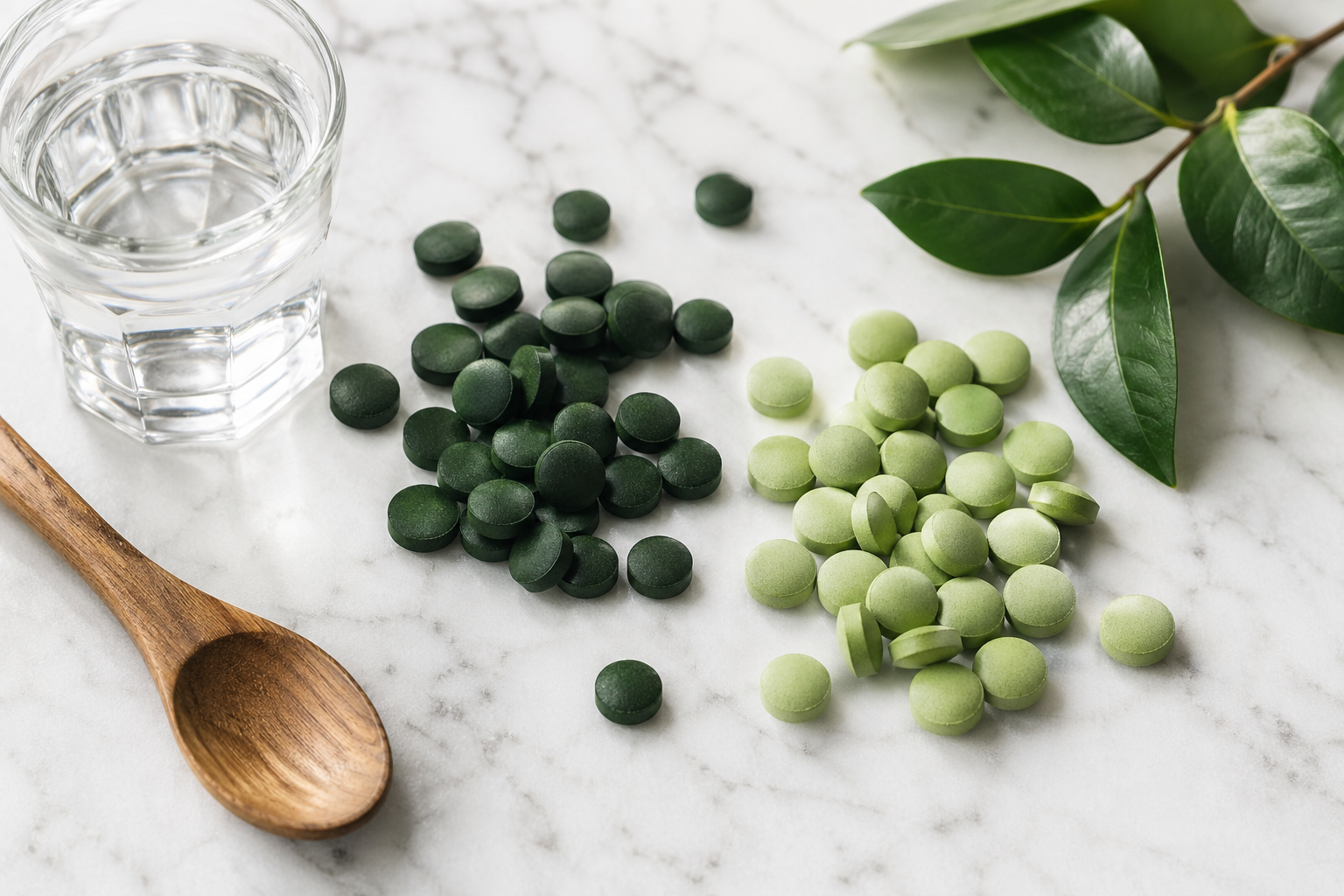
Some of the most powerful longevity tools are the ones that have been around the longest. Spirulina has been consumed by humans for centuries. Ancient Aztec civilizations harvested it from Lake Texcoco in Mexico. African communities around Lake Chad have used it as a food staple for generations. NASA studied it as a candidate food for long-duration space travel, noting that a single kilogram of algae contains the nutritional equivalent of roughly a thousand kilograms of fruits and vegetables.
What modern research has added to that long history is a mechanistic understanding of why these two microalgae produce such pronounced effects on human health. The picture that has emerged is genuinely compelling: spirulina and chlorella operate through several distinct biological pathways that map directly onto the cellular aging, inflammation, and detoxification processes that longevity researchers care about most.
This post covers the science behind the best spirulina and chlorella supplements, explains exactly how they differ and why that matters for your protocol, and ranks the best options currently available based on sourcing, purity, and the quality markers that separate effective products from cheap filler.
We also recommend our guide on the Best NMN Supplements for NAD+ Restoration.
Table of Contents
The Wellness Review participates in the Amazon Associates program. If you purchase through our links, we may earn a commission at no additional cost to you. All product recommendations are editorially independent and evidence-based.
What Spirulina Actually Is and Why It Matters
Before getting into the science of the best spirulina and chlorella supplements, a clarification worth making: Spirulina is not technically an algae. It is a cyanobacterium, a type of blue-green photosynthetic bacterium that grows in warm, alkaline freshwater bodies. This distinction matters nutritionally because spirulina has no cellulose cell wall, which means its nutrients are immediately bioavailable without any special processing or digestion assistance.
Spirulina platensis is the species used in almost all research and commercial products. Its nutritional profile is genuinely extraordinary. Approximately 60 to 70% of spirulina’s dry weight is protein, including all nine essential amino acids, making it one of the most complete plant-based protein sources on Earth. But for biohackers, the protein content is almost secondary. The compounds that make spirulina interesting from a longevity standpoint are its bioactive pigments and antioxidant compounds, particularly phycocyanin.
Phycocyanin is a blue biliprotein found almost nowhere else in nature. It gives spirulina its characteristic blue-green color and is responsible for a significant portion of its therapeutic properties. Research describes it as a potent free radical scavenger that activates cellular antioxidant enzymes, including superoxide dismutase (SOD), catalase, and glutathione peroxidase, all three of which play central roles in the cellular antioxidant defense system that protects mitochondria and DNA from oxidative damage. Phycocyanin also selectively inhibits cyclooxygenase-2 (COX-2), the inflammatory enzyme targeted by common anti-inflammatory drugs, through a mechanism that makes spirulina a genuinely anti-inflammatory food rather than just a nutrient-dense one.
Beyond phycocyanin, spirulina contains beta-carotene, vitamin E, B-complex vitamins including B12 (rare in plant sources), iron, magnesium, potassium, and gamma-linolenic acid (GLA), an omega-6 fatty acid with anti-inflammatory properties. For the practical biohacker, spirulina can legitimately reduce the number of individual supplements needed because its nutrient profile covers multiple deficiency risks simultaneously.
What Chlorella Is and How It Differs
Chlorella is a true single-celled green algae, and the distinction between the best spirulina and chlorella supplements is more than taxonomic. Chlorella has a tough cellulose cell wall that human digestive enzymes cannot break down without assistance, which is why you’ll see the term “cracked cell wall” on quality chlorella products. This processing step is not optional. Whole-cell chlorella with intact walls passes through the digestive system largely intact, delivering little nutritional value. Broken or cracked cell wall chlorella, achieved through mechanical processing techniques like high-pressure processing or flash expansion, releases the contents for absorption.
Chlorella vulgaris and Chlorella pyrenoidosa are the two primary species in commercial supplements. Both have been studied for their health benefits. Pyrenoidosa is generally considered the higher-quality species for therapeutic applications because of its superior Chlorella Growth Factor (CGF) content, a nucleotide-peptide complex found in the cell nucleus that supports cellular repair and regeneration.
Where chlorella genuinely stands apart from spirulina is in its heavy metal binding capacity. Chlorella’s cell wall mucopolysaccharides, combined with its high chlorophyll content, give it an exceptional ability to bind to heavy metals in the gastrointestinal tract and facilitate their excretion. A clinical study in patients with long-term dental amalgam fillings found that 90 days of chlorella supplementation significantly reduced hair levels of mercury, silver, tin, and lead. Separate research documented a 56% reduction in lead levels at four days of chlorella supplementation, 69% at eight days, and 77% at twelve days of treatment.
This binding mechanism operates through a process called biosorption: Chlorella’s polysaccharides physically bind to heavy metal ions in the gut and bloodstream, pulling them into the digestive pathway for elimination rather than allowing them to accumulate in organs and tissues. Given that chronic low-level heavy metal exposure from diet, environment, and dental materials is increasingly recognized as a contributor to systemic inflammation and accelerated aging, chlorella’s binding capacity is not a minor side benefit. It is one of the more clinically meaningful detoxification mechanisms available in a food-based supplement.
Chlorella also contains more chlorophyll per gram than any other known plant or algae. Chlorophyll structurally resembles hemoglobin, with magnesium at the center of its porphyrin ring rather than iron, and research suggests it can bind to carcinogens and other environmental toxins in the gut and prevent their absorption, adding another dimension to its detoxification profile.
The 4 Best Spirulina and Chlorella Supplements
1. Nutrex Hawaii Pure Hawaiian Spirulina Powder

Best For: Premium Single-Origin Spirulina With the Most Documented Purity
Nutrex Hawaii has been growing spirulina on the Kona coast of Hawaii since 1984, making it the oldest and most established of the best spirulina and chlorella supplements in the United States. Their facility uses a closed-system cultivation method in deep-sea water drawn from 2,000 feet below the Pacific Ocean surface, which is essentially free of surface pollutants and agricultural runoff. The result is the most independently tested and purity-verified spirulina available.
The phycocyanin content of Hawaiian spirulina is documented at approximately 14 to 17% of dry weight, toward the higher end of what consumer spirulina products deliver. The powder format provides flexibility for dose adjustment and easy addition to smoothies, while the 90-day supply at full recommended dosing makes it practical for sustained daily use. Nutrex publishes comprehensive third-party test results, including heavy metal analysis, and its product has been used in peer-reviewed research studies, giving it a level of scientific traceability that most competitors cannot match.
Strain: Arthrospira platensis Growing Source: Kona, Hawaii, closed-system deep-sea water Testing: Third-party heavy metal and purity verified Best For: Spirulina purists, powder protocol users, maximum phycocyanin content
2. Micro Ingredients Organic Spirulina Chlorella Mini Tablets

Best For: Best Value 50/50 Combination in a Practical Format
Micro Ingredients has built a strong reputation for delivering certified organic supplements at accessible price points with clean formulas. Their spirulina-chlorella combination tablets use a 50/50 blend of Arthrospira platensis spirulina and broken cell wall Chlorella pyrenoidosa, both USDA Organic certified, in a compact mini-tablet format that is significantly easier to swallow than the larger tablets common in the same best spirulina and chlorella supplements category.
At 2,500 tablets per container, this is an 8-month supply at the standard recommended dose, making it the most cost-effective organic combination option on the list. The broken cell wall specification on the chlorella component confirms proper processing for bioavailability. The tablets are free of additives, fillers, binders, artificial colors, and GMOs, and the organic certification covers both the growing environment and processing.
For biohackers who want the synergistic benefit of the best spirulina and chlorella supplements in a single daily protocol without managing two separate products, this is the most practical and economical solution. The mini-tablet format is particularly useful for reaching clinically meaningful doses (typically 3,000 to 6,000 mg per day) without swallowing oversized tablets.
Strains: Arthrospira platensis + Chlorella pyrenoidosa Certification: USDA Organic, Non-GMO Cell Wall: Broken (chlorella) Best For: Daily combination protocol, best value per gram, high-volume dosing
3. Sun Chlorella 200mg Tablets

Best For: Premium Chlorella with Pulverized Cell Wall Technology
Sun Chlorella is a Japanese company that pioneered commercial chlorella production and developed the DYNO-Mill pulverization method, which breaks chlorella cell walls using high-pressure mechanical force without heat, preserving all heat-sensitive compounds, including Chlorella Growth Factor, while achieving near-complete cell wall breakdown for maximum bioavailability. This proprietary processing method represents a technical step above standard cracked-cell-wall chlorella in terms of nutrient release efficiency, making it one of the best spirulina and chlorella supplements.
Each 300-tablet container provides a 30-day supply at the standard 10-tablet dose, delivering 2,000 mg of chlorella daily. Sun Chlorella is particularly high in CGF and active B12, the latter being genuinely rare in algae products that typically contain B12 analogues rather than the bioactive form. The active B12 specification makes Sun Chlorella a meaningful supplement for plant-based eaters who commonly develop B12 deficiency.
For buyers whose primary goal is heavy metal detoxification support and cellular repair rather than the combined spirulina-chlorella nutritional profile, Sun Chlorella is the most technically sophisticated standalone chlorella option available.
Species: Chlorella pyrenoidosa Processing: DYNO-Mill pulverization (proprietary, heat-free) Notable: Active B12, high CGF content Best For: Heavy metal detox priority, standalone chlorella protocol, plant-based B12 source
4. ENERGYbits Organic Spirulina Tablets

Best For: Research-Backed Single-Ingredient Spirulina with Elite Athlete Endorsement
ENERGYbits is the consumer brand that has most aggressively pursued independent scientific validation for its spirulina products, including a pilot trial conducted in collaboration with UC San Diego that documented the mitochondrial energy production improvements discussed in the science section above. Their spirulina tablets contain 100% Arthrospira platensis with no additives, fillers, binders, or preservatives, cold-processed to preserve phycocyanin content, and produced under ISO 9000 and GMP certification.
The brand is endorsed by over 50 Olympic and professional athletes and more than 1,000 nutrition and wellness practitioners, which provides practical performance-context credibility alongside the scientific documentation, clearly making it one of the best spirulina and chlorella supplements. The tablets are grown using organic cultivation practices and independently tested for purity and heavy metals. Available on Amazon in 1,000-tablet containers.
ENERGYbits positions itself at the premium end of the spirulina market, and its price reflects that. For biohackers specifically tracking mitochondrial performance who want the most research-connected spirulina product available through Amazon, it earns that premium.
Strain: Arthrospira platensis (100% pure) Processing: Cold-processed, no heat Testing: Independent heavy metal and purity testing Best For: Mitochondrial performance focus, athletes, research-traceability priority
The Science of Cellular Detox: What These Algae Are Actually Doing
The word “detox” gets thrown around carelessly in wellness marketing, often attached to products that have no biological mechanism for supporting the body’s actual elimination pathways. Spirulina and chlorella are different. Their detoxification effects operate through mechanisms that are well-characterized in peer-reviewed research.
Your body’s primary detoxification systems are the liver, kidneys, and gastrointestinal tract. The liver processes toxic compounds through two phases of enzymatic transformation, converting fat-soluble toxins into water-soluble forms that can be excreted through bile or urine. Both phases depend heavily on antioxidant cofactors, particularly glutathione, which is synthesized from the amino acids cysteine, glycine, and glutamate. Spirulina contains both cysteine and glutamate in meaningful quantities, supporting the glutathione synthesis pathway directly. Phycocyanin further protects hepatocytes (liver cells) from oxidative damage caused by toxic exposure, functioning as what researchers describe as a hepatoprotective agent.
A 2025 review published in the Journal of Pharmacy and Bioallied Sciences specifically examined spirulina’s detoxifying effects on liver health and heavy metal elimination, concluding that spirulina reduces heavy metals within the bloodstream tissue at levels demonstrating its capability as a detox agent, while phycocyanin and polysaccharides work synergistically to bind and neutralize toxic metals before they can damage organ tissue.
For mitochondrial health specifically, the connection is equally direct. Research published in Cell Stress and Chaperones found that Spirulina platensis improves mitochondrial function impaired by oxidative stress. A pilot trial at UC San Diego found that seven days of daily spirulina supplementation improved the ratio of ATP production to glycolysis by approximately 15% while significantly reducing reactive oxygen species (ROS). Given that nearly 50% of people under age 40 already show markers of mitochondrial dysfunction, and that this percentage rises sharply with age, a food that directly supports mitochondrial function is not a peripheral supplement. It belongs in the core longevity protocol.
Spirulina vs. Chlorella: Who Does What
Think of spirulina and chlorella as two specialists on the same cellular maintenance crew, each bringing different strengths.
Spirulina is the energizer and antioxidant powerhouse. Its primary value comes from phycocyanin’s anti-inflammatory and antioxidant activity, its dense protein and micronutrient profile, its support of mitochondrial function, and its ability to reduce oxidative stress throughout the body. Athletes and biohackers tend to use spirulina before training or in the morning because it supports energy production without stimulants.
Chlorella is the detox and repair specialist. Its heavy metal binding capacity is unmatched in the food-based supplement world. Its CGF content supports cellular regeneration. Its chlorophyll density supports liver and gastrointestinal detoxification pathways. And it contains tryptophan, a serotonin precursor that many users report improves mood and sleep quality. Chlorella is often taken in the evening or before sleep to support overnight cellular repair and detoxification.
The two are complementary rather than redundant, which is why the best spirulina and chlorella supplements exist. Used together, they cover different parts of the cellular health spectrum and have been shown in research to produce synergistic effects on antioxidant defense systems. Most serious longevity users take both, either as a 50/50 combination tablet or as separate products timed for different parts of the day.
Quality Markers: What Separates the Best Spirulina and Chlorella Supplements From Bad Ones
This is the section that most product reviews skip, and it’s the most important one for anyone buying algae supplements. Because spirulina and chlorella grow in aquatic environments through biosorption, they absorb whatever is in their growing water, including heavy metals, pesticides, and microbial contaminants. A low-quality spirulina or chlorella product from a contaminated growing environment can actually introduce the heavy metals it’s supposed to help remove.
Growing environment and water source. The best spirulina and chlorella supplements come from controlled growing environments using purified, contaminant-free water. Hawaiian-grown spirulina (Nutrex Hawaii) and Taiwan-sourced chlorella grown with mountain spring water have documented track records of purity. Products grown in open ponds in regions with industrial pollution are a contamination risk.
Third-party heavy metal testing. The non-negotiable quality standard. Any brand worth buying publishes independent lab results verifying the absence of lead, mercury, arsenic, and cadmium. This documentation should be accessible by batch number, not buried in small print. A 2025 study analyzing 52 commercially available spirulina and chlorella supplements specifically flagged heavy metal contamination as a concern across the category, reinforcing why this testing matters.
Cracked or broken cell wall for chlorella. As discussed, intact-wall chlorella delivers minimal nutritional value. Look explicitly for “cracked cell wall,” “broken cell wall,” or “pulverized cell wall” on any chlorella product label.
Strain specificity. The research on spirulina has been conducted almost entirely on Arthrospira platensis. For chlorella, Chlorella pyrenoidosa is the preferred therapeutic species. Products listing only “spirulina” or “chlorella” without strain identification may be using lower-value variants.
Processing temperature. High heat during processing degrades phycocyanin and heat-sensitive vitamins. Cold-processed or low-temperature pressed tablets preserve more of the active compounds than products exposed to significant heat during manufacturing. Look for “raw,” “cold-pressed,” or “low-temperature processed” labeling.
Dosing for clinical relevance. Most clinical studies on spirulina used doses of 1 to 8 grams per day. Products dosed at 500 mg per serving, requiring two tablets per day, will never get you to a therapeutically meaningful intake without consuming impractical quantities. Products with 3,000 mg per serving in 6 to 8 tablets are structured around the doses used in actual research.
How to Use the Best Spirulina and Chlorella Supplements: A Practical Protocol
Starting dose and progression. Both the best spirulina and chlorella supplements can cause mild digestive discomfort in people new to algae supplementation, particularly those with sensitive guts. The detoxification activity is genuine and can produce a brief adjustment period as the body begins mobilizing accumulated toxins. Starting at 1 to 2 grams per day and increasing by 1 gram weekly over 3 to 4 weeks allows the body to adapt without adverse effects.
Target maintenance dose. Clinical research on spirulina used doses ranging from 1 to 8 grams per day, depending on the health outcome studied. For daily longevity protocol use, 3 to 6 grams total per day (combining spirulina and chlorella) covers the dosing range where most meaningful benefits have been documented. Splitting this between morning and evening allows for the timing optimization described below.
Timing for maximum effect. Spirulina in the morning or before training takes advantage of its energizing phycocyanin compounds and mitochondrial support effects during peak activity periods. Chlorella in the evening or before sleep supports overnight detoxification and cellular repair through its CGF content and heavy metal binding mechanisms. This morning/evening split is the protocol used by many longevity-focused practitioners and aligns with the research on each compound’s primary mechanisms.
Food combinations that enhance absorption. The best spirulina and chlorella supplements benefit from being taken with food that contains some fat, which improves absorption of fat-soluble compounds, including beta-carotene and chlorophyll. Vitamin C consumed alongside either algae enhances iron absorption from both. Avoid combining with hot beverages immediately before or after consumption, as heat can degrade phycocyanin.
What to watch for. Green or darker stool coloration is normal and reflects the high chlorophyll content. A temporary mild detox response, including headache or fatigue during the first week or two, is not unusual and typically resolves as the body adjusts. Anyone with autoimmune conditions, phenylketonuria, or seafood allergies should consult a healthcare provider before supplementing with either algae.
Cofactors That Amplify the Detox Effect
The best spirulina and chlorella supplements work best as part of a broader cellular detoxification and protection strategy rather than as standalone solutions. Several other interventions are synergistic with their mechanisms.
Adequate hydration is the simplest cofactor. Heavy metal elimination through bile and urine requires sufficient fluid volume to carry toxins out of the body. Chronically low hydration limits the effectiveness of any detoxification protocol.
Selenium, found naturally in Brazil nuts and some animal proteins, directly activates glutathione peroxidase, one of the same antioxidant enzymes that phycocyanin supports. Together, selenium and spirulina provide complementary protection for the glutathione system.
Infrared sauna use, covered in our portable sauna guide, drives toxin elimination through sweat and provides a hormetic cardiovascular stimulus. Running spirulina and chlorella supplementation alongside a regular sauna practice creates a multi-pathway detox protocol that covers gastrointestinal elimination, hepatic processing, urinary excretion, and transdermal sweating simultaneously.
Finally, fiber, particularly soluble fiber from foods like oats, psyllium husk, and legumes, supports the chlorella-initiated heavy metal elimination process by binding toxins in the gut and facilitating their transit out of the body. Chlorella mobilizes toxins; fiber helps carry them out.
Final Recommendation: Which of the Best Spirulina and Chlorella Supplements to Buy
For the cleanest, most purity-verified spirulina with the longest track record: Nutrex Hawaii Pure Hawaiian Spirulina is the call. The Hawaiian growing environment, deep-sea water sourcing, and three decades of independent testing documentation put it in a category by itself for pure spirulina quality. If you want one spirulina product you can be fully confident in, this is it.
For the most practical daily combination protocol at the best value: The Micro Ingredients Organic Spirulina Chlorella Mini Tablets cover both algae in an organic, broken-cell-wall format at a price that makes sustained daily use genuinely affordable. The mini-tablet format makes hitting meaningful daily doses practical.
For heavy metal detox as the primary goal: Sun Chlorella’s DYNO-Mill pulverization technology and high CGF content make it the most scientifically sophisticated chlorella option available on Amazon. For anyone specifically concerned about mercury, lead, or other heavy metal accumulation, this is the targeted choice.
For athletes and biohackers specifically focused on mitochondrial energy production: ENERGYbits is the most research-connected spirulina on this list and earns its premium price for buyers who want the version of spirulina most directly tied to the mitochondrial performance research.
The best spirulina and chlorella supplements are among the oldest foods on Earth. They’ve survived billions of years of evolution because they work. The modern research is now catching up to what traditional cultures already knew, and what the data shows is that spirulina and chlorella belong in the longevity protocol of anyone serious about cellular health, mitochondrial function, and the systemic inflammation reduction that separates healthy aging from accelerated decline.
Was this article helpful? Read one of these next:


Leave a Reply