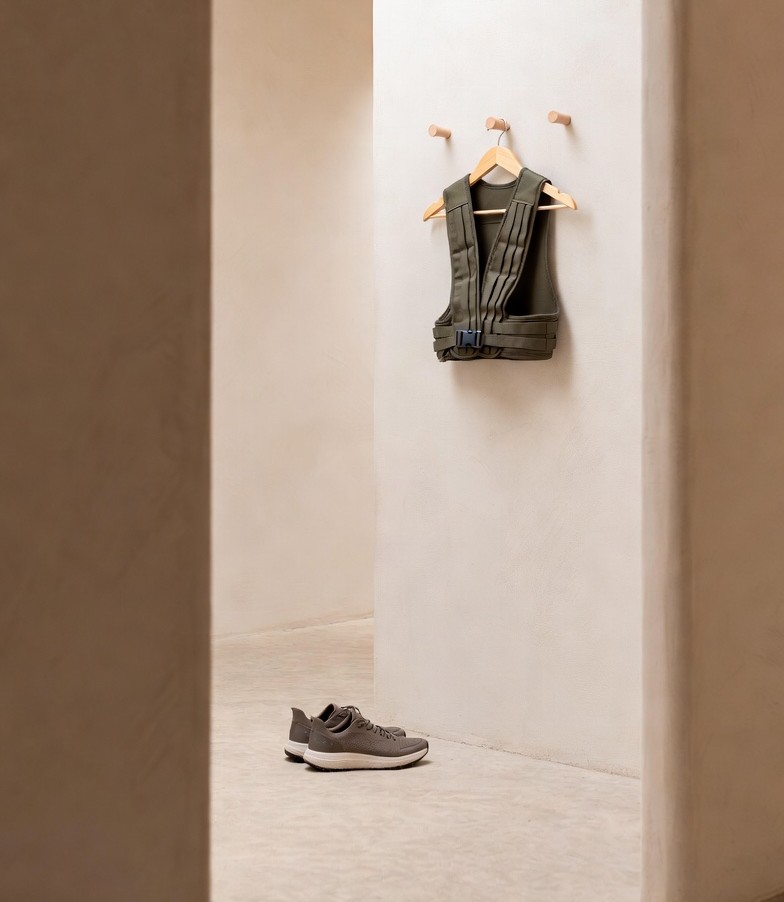
In the longevity community, we often talk about muscle mass (Sarcopenia), but we frequently overlook the silent thinning of our structural “chassis,” our bones. Osteopenia and Osteoporosis are significant threats to healthspan, as a single fall can lead to a hip fracture, which carries a staggering mortality rate in older adults.
The solution isn’t just calcium and Vitamin D; it’s mechanical loading. By wearing one of the best weighted vests for bone density walks during your daily zone 2 cardio workout, you are performing a form of “rucking” that applies gravitational pressure to your skeletal system. This pressure triggers a biological process called Wolff’s Law, which states that bone grows and strengthens in response to the forces placed upon it.
We also recommend checking out our guide on the Best Balance Boards for Longevity.
Table of Contents
Affiliate Disclosure: As an Amazon Associate, we may earn a commission from qualifying purchases at no additional cost to you.
The Science: Mechanical Loading and Bone Remodeling
Bone is a living, dynamic tissue. It constantly undergoes a process of resorption (breaking down) and formation (building up).
- The Hip & Spine Focus: Walking with a vest specifically targets the femoral neck (hip) and the lumbar spine, the two most common sites for osteoporotic fractures.
- Axial Loading: Unlike handheld weights or ankle weights, the best weighted vests for bone density walks distribute weight across your torso, providing “axial loading” that compresses the spine in a safe, controlled manner.
- Metabolic Boost: Beyond bone health, the extra weight increases the metabolic cost of your walk, improving cardiovascular efficiency and increasing caloric burn without requiring you to run or perform high-impact movements.
The Technical Checklist: Choosing Your Vest
For bone density purposes, not all vests are created equal. In 2026, the “longevity standard” for the best weighted vests for bone density walks includes:
- Adjustability: You must be able to start light (e.g., 5% of your body weight) and gradually increase as your bone and connective tissue adapt. Vests with removable 1lb or 2lb weights are ideal.
- Weight Distribution: Look for “X-shape” or high-chest designs for women to avoid pressure on breast tissue, and ensure the weight is balanced between the front and back to maintain proper posture.
- Breathability: Since these walks should last 30–60 minutes, moisture-wicking materials and mesh panels are essential to prevent overheating.
Best Weighted Vests for Bone Density Walks (2026)
1. The Ergonomic Leader: Aduro Sport Weighted Vest

The Aduro Sport is a favorite for those focusing on “long-and-slow” longevity walks. Its neoprene design is soft against the skin, and the weight is evenly distributed to prevent shifting.
Best For: Beginners and women who want a comfortable, low-profile vest for neighborhood walks.
The Benefit: It features a secure buckle system that prevents the “bounce” often found in cheaper vests. The mesh pocket on the back is perfect for carrying your smartphone while tracking your gait and heart rate.
2. The Heavy-Duty Choice: RUNmax Adjustable Weighted Vest

For those looking to progress toward higher loads (the “Rucking” protocol), the RUNmax offers incredible durability and a high weight ceiling.
- The Benefit: It allows for granular adjustment, with weights that can be added or removed in small increments. The shoulder pads are extra-thick to prevent digging during longer 5-mile treks.
- Best For: Advanced longevity seekers who want a vest that grows with their strength.
3. The Precision Fit: ZFOsports Weighted Vest

The ZFOsports vest is engineered for stability. Its mid-torso belt ensures the weight stays close to your center of gravity, which is vital for maintaining proper spinal alignment and preventing lower back strain.
- The Benefit: The unique design allows for a full range of motion, making it suitable not just for walking, but for bodyweight movements like squats and lunges to further stimulate bone growth.
- Best For: Individuals with a smaller frame who struggle with the “one-size-fits-all” bulk of other brands.
The Biology of Bone Loading: Understanding Osteoblasts vs. Osteoclasts
To understand why the best weighted vests for bone density walks are a non-negotiable longevity tool, we have to look at the cellular level. Bone is a dynamic tissue that is constantly being “remodeled.” This process is managed by two primary cell types: Osteoclasts (which break down old bone) and Osteoblasts (which build new bone).
- The Mechanostat Theory: Your bones have a built-in “sensor” that measures the strain placed upon them. When you add a weighted vest, you increase the peak ground reaction forces with every step.
- The Signaling Pathway: This mechanical strain deforms the bone slightly, creating a tiny electrical charge (piezoelectricity) that signals osteoblasts to migrate to the area and lay down new mineral matrix.
- Preventing the “Drift”: As we age, osteoclast activity often outpaces osteoblast activity (especially post-menopause). Walking with a vest is a “biological signal” that overrides this age-related drift, forcing the body to prioritize skeletal structural integrity.
Safety & Spine Health: The “Anti-Fragility” Checklist
Adding weight to your frame is a powerful intervention, but it must be done with precision to avoid compressing the intervertebral discs or straining the lower back, which is where the best weighted vests for bone density walks come into play. For the longevity seeker, posture is more important than poundage.
- The “Shoulder-Blade” Rule: Ensure the vest pulls your shoulders into a neutral or slightly retracted position. Avoid any vest that causes you to “slump” forward, as this creates sheer force on the lumbar spine.
- Core Bracing: Even during a casual walk, maintaining a light “brace” in your core helps stabilize the spine under the extra load. Think of the vest as a tool to train your posture-supporting muscles (the erector spinae) just as much as your bones.
- Footwear Matters: When you add 10–20 lbs to your body, your feet take the brunt of the impact. Ensure you are wearing shoes with adequate arch support and cushioning to prevent plantar fasciitis or stress fractures in the metatarsals.
- Listen to the Hips: If you feel “sharp” or “pinchy” pain in the hip sockets, reduce the weight immediately. Bone density is built through consistency over months, not by overloading in a single week.
The Bone Density Protocol: How to Start
To avoid injury and maximize osteogenic loading, follow this adaptation schedule:
- Phase 1 (Weeks 1-4): Start with 4-5% of your body weight. Walk for 20 minutes, 3 times a week.
- Phase 2 (Weeks 5-8): Increase to 8-10% of your body weight. Extend walks to 30-45 minutes.
- Phase 3 (Maintenance): Aim for 12-15% of your body weight. This is the “sweet spot” for maintaining high bone mineral density without excessive joint wear.
- The Posture Check: Keep your chest up and shoulders back. If you find yourself slouching, the weight is too heavy for your current core strength.
Conclusion: Building a Stronger Chassis
The best weighted vests for bone density walks are one of the most cost-effective investments in your longevity lab. It turns a simple walk into a powerful medical intervention for your skeletal system. By choosing a high-quality, adjustable vest like the Aduro Sport or RUNmax, you take a proactive stand against the fragility that often accompanies aging, ensuring you remain mobile and resilient throughout your entire lifespan.
Was this article helpful? Read one of these next:
Leave a Reply