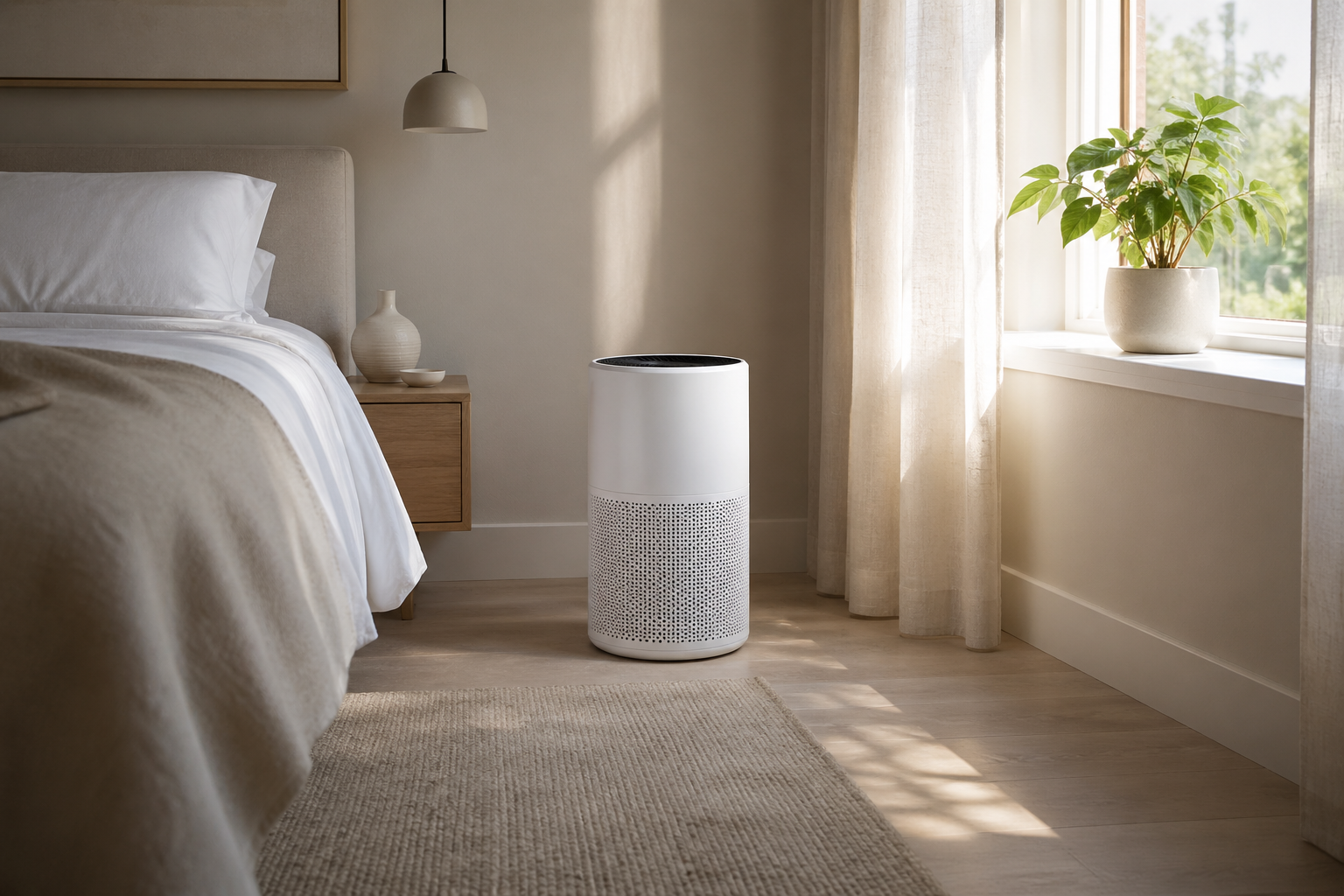
Here is a number that should reframe how you think about your home environment: you spend approximately 90% of your time indoors. And according to the Environmental Protection Agency, the air inside that indoor environment is typically two to five times more polluted than the air outside, even in major urban areas.
This is not a fringe claim. It is a well-established finding that has been replicated consistently across indoor air quality research for decades, and it has significant implications for anyone serious about longevity. The chronic inflammatory load created by breathing low-grade indoor pollution every day, in your bedroom, your living room, your home office, compounds over years and decades in ways that the research now links directly to cardiovascular disease, cognitive decline, and accelerated biological aging.
The good news is that this is one of the most solvable environmental health problems available to a biohacker. One of the best air purifiers running consistently in the rooms where you spend the most time can reduce indoor particulate matter by over 90% and meaningfully lower VOC concentrations. The technology is proven, the products are accessible, and the ongoing cost is modest compared to the health investment it represents.
This guide covers the science of what indoor air pollution is actually doing to your biology, explains what to look for in an air purifier, and ranks the five best options currently available on Amazon for VOC and particulate removal specifically.
Table of Contents
The Wellness Review participates in the Amazon Associates program. If you purchase through our links, we may earn a commission at no additional cost to you. All product recommendations are editorially independent and evidence-based.
The Longevity Case for Indoor Air Quality
Most people think about the best air purifiers in the context of allergies or asthma. That framing dramatically undersells the stakes. The current research on indoor air pollution and long-term health outcomes is significantly more alarming than the allergy narrative suggests, and it is directly relevant to the biological aging processes that this publication focuses on.
Particulate matter, particularly PM2.5 (fine particles smaller than 2.5 microns in diameter), is classified by the American Heart Association as a cardiovascular risk factor alongside smoking, obesity, and high blood pressure. Chronic exposure to PM2.5 contributes to arterial inflammation, accelerated atherosclerosis, endothelial dysfunction, and elevated risk of heart attack and stroke. A systematic review published in The Lancet Planetary Health confirmed that chronic air pollution exposure increases the risk of cognitive decline and dementia, including Alzheimer’s disease, through mechanisms that include chronic neuroinflammation, accumulation of pollutants in brain tissue, vascular damage affecting brain blood flow, and direct oxidative stress on neurons.
PM2.5 particles are small enough to cross from the lungs into the bloodstream, and from the bloodstream across the blood-brain barrier. This is not a theoretical concern. Studies using postmortem brain tissue have identified particulate matter accumulations in brain samples from people who lived in high-pollution environments. The particles are physically present in brain tissue.
VOCs (volatile organic compounds) add a separate and equally concerning dimension. A 2025 PubMed review examining VOC exposure in indoor environments concluded that prolonged exposure to VOCs has been associated with respiratory irritation, neurological effects, and an increased risk of chronic diseases. VOCs originate from sources that are present in virtually every home: building materials, paints and finishes, synthetic furniture and carpeting, cleaning products, personal care products, adhesives, and cooking. They are invisible, odorless at low concentrations, and present continuously.
The specific mechanism connecting VOCs and longevity is inflammation. Research published in peer-reviewed journals has documented that exposure to indoor VOC mixtures increases markers of airway inflammation, including elevated urinary leukotriene E4 and fractional exhaled nitric oxide. These are the same inflammatory pathways that the longevity community spends considerable effort trying to suppress through diet, supplementation, and lifestyle practices. Managing indoor air quality is, in a real sense, an anti-inflammatory intervention.
The cumulative picture is this: if you are optimizing supplements, sleep, diet, and exercise while breathing low-grade polluted indoor air for 18 to 20 hours per day, you are fighting your inflammatory biology with one hand tied behind your back.
What Is Actually in Your Indoor Air
Understanding the specific pollutant categories helps you match one of the best air purifiers to your actual exposure profile rather than buying a generic.
Particulate Matter (PM2.5 and PM10) includes dust, pollen, mold spores, pet dander, cooking emissions, and combustion particles from candles, gas appliances, and incense. PM2.5 is the more dangerous fraction because of its ability to penetrate deeply into lung tissue and cross into circulation. A real-time demonstration of how significant cooking emissions are: PM2.5 levels measured in a kitchen during normal dinner preparation (sautéing chicken and boiling noodles) spiked from 1 to 57 micrograms per cubic meter, over six times the EPA’s safe outdoor limit of 9 micrograms per cubic meter, and remained elevated for 30 minutes after cooking stopped, even with a range hood running.
Volatile Organic Compounds are gaseous chemicals that evaporate at room temperature and are present in most synthetic household materials. Common sources include formaldehyde from pressed wood furniture, benzene from attached garages and building materials, toluene from paint and adhesives, and a broad range of compounds from cleaning products and air fresheners. VOCs are too small to be captured by HEPA filters, which is why VOC-specific activated carbon filtration is a separate and essential requirement from particulate filtration.
Biological Contaminants include mold spores, bacteria, viruses, and dust mite fragments. True HEPA filtration captures the vast majority of these.
Ozone is worth a separate note because some air purifiers generate it as a byproduct of ionization technology. Ozone reacts with VOCs to create secondary pollutants, including aldehydes, hydrogen peroxide, and ultrafine particles. An air purifier that generates ozone is literally making part of your indoor air problem worse. Any product you buy should either be ozone-free by design or have the ionizer feature disabled as the default.
The 5 Best Air Purifiers for VOC and Particulate Removal
1. Levoit Core 400S Smart True HEPA Air Purifier

One of the Best Air Purifiers For: Bedroom and Home Office Use, Smart Home Integration, Best All-Around Value
The Levoit Core 400S is the most consistently top-ranked mid-range air purifier across independent testing organizations in 2026, and its combination of performance, features, and price is difficult to beat. In independent lab testing, the Core 400S delivers CADR ratings of 260 CFM for smoke, 240 CFM for dust, and 260 CFM for pollen, covering rooms up to 403 square feet at five air changes per hour. In real-world testing, it reduced PM2.5 particulate matter from 101.7 to 4.5 micrograms per cubic meter in a 320 square foot room, a 96% reduction.
The three-stage filtration system uses a washable pre-filter, an H13 True HEPA filter that captures 99.97% of particles down to 0.3 microns, and an activated carbon filter for VOC and odor reduction. The H13 designation indicates a higher-grade HEPA specification than standard H11 filters. The VeSync app provides real-time air quality monitoring, filter life tracking, and remote control from anywhere, and the purifier integrates with both Amazon Alexa and Google Assistant for voice control automation.
The sleep mode runs at 24 decibels, which is quieter than a whisper, making it genuinely viable for continuous overnight bedroom use without disrupting sleep. The LED display can be turned off completely for blackout sleeping conditions. At its price point, with annual filter costs around $49.99, the total cost of ownership is among the lowest of any purifier in its performance tier.
CADR: 260 CFM (smoke), 240 CFM (dust), 260 CFM (pollen) Coverage: Up to 403 sq ft at 5 ACH Filtration: Pre-filter, H13 True HEPA, activated carbon Best For: Bedrooms, home offices, smart home users, best overall value
2. Winix 5500-2 True HEPA Air Purifier with PlasmaWave

One of the Best Air Purifiers For: Large Living Spaces, Serious VOC Reduction, Best for Cooking Emissions
The Winix 5500-2 has maintained its position as one of the most consistently recommended and best air purifiers in the category for years, and the 2026 landscape has not produced a clear challenger at its price point for large-room performance. It covers rooms up to 360 square feet at five air changes per hour, making it the right choice for open-plan living areas, combined kitchen-living spaces, or any room where the Levoit’s 403 square foot coverage is insufficient.
The four-stage filtration uses a washable pre-filter, an advanced odor control carbon filter (significantly larger than the thin carbon layers on budget alternatives), a True HEPA filter capturing 99.99% of particles at 0.3 microns, and CARB-certified PlasmaWave technology. The PlasmaWave layer provides an additional neutralization mechanism for VOCs and biological contaminants without generating ozone, verified by California’s strict air cleaner certification program.
The auto mode uses a built-in air quality sensor to continuously adjust fan speed in response to real-time particulate readings. The sleep mode runs quietly with all indicator lights dimmed. The remote control included in the box is a practical differentiator for bedroom or living room use, where getting up to adjust settings is inconvenient. Annual filter cost runs approximately $50 to $60, making long-term operating costs reasonable.
CADR: 243 CFM (smoke), 232 CFM (dust), 246 CFM (pollen) Coverage: Up to 360 sq ft at 5 ACH Filtration: Pre-filter, advanced carbon, True HEPA (99.99%), PlasmaWave Best For: Large rooms, cooking emission management, whole-room VOC and particulate control
3. Coway AP-1512HH Mighty Air Purifier

One of the Best Air Purifiers For: Budget-Conscious Buyers Who Refuse to Sacrifice Performance
The Coway AP-1512HH has been considered one of the best air purifiers for over a decade, and its continued presence on every major independent review organization’s top picks list in 2026 reflects a product that simply performs at a level the price does not suggest it should. In head-to-head testing against the Levoit Core 400S in a 320 square foot room, both units achieved 96% air quality improvement. For particulate removal specifically, the Coway performs at the same level as units costing twice as much.
The four-stage filtration system uses a washable pre-filter, a carbon filter, a True HEPA filter, and an optional ionizer (which should be turned off to avoid the small ozone output it produces). The air quality indicator uses a color-coded LED that gives an at-a-glance read on current air quality without requiring an app. The eco mode automatically shuts the fan down when the sensor detects clean air for 30 minutes, reducing electricity consumption meaningfully over continuous 24-hour operation.
The CADR ratings place it among the strongest performers in rooms up to 361 square feet. CARB-certified. Annual operating cost runs approximately $152 per year, including electricity and filter replacement, making it one of the lower total cost options in the category for its performance tier.
CADR: 246 CFM (smoke), 240 CFM (dust), 240 CFM (pollen) Coverage: Up to 361 sq ft at 5 ACH Filtration: Pre-filter, carbon, True HEPA, optional ionizer Best For: Budget buyers, performance-first priority, rooms up to 361 sq ft
4. Austin Air HealthMate Plus

Best For: Maximum VOC and Chemical Removal, Chemical Sensitivity, Formaldehyde Exposure
The Austin Air HealthMate Plus occupies a different category from the other best air purifiers on this list. Where the Levoit, Winix, and Coway are optimized for the balance of particulate and VOC removal at consumer-friendly prices, the Austin Air is engineered specifically for people with serious chemical sensitivity or elevated VOC exposure, and the activated carbon quantity reflects that priority.
The HealthMate Plus contains 15 pounds of activated carbon and zeolite blend, an order of magnitude more than the thin carbon layers in consumer air purifiers. This is not a marketing claim: 15 pounds of activated carbon provides dramatically greater adsorption capacity for formaldehyde, benzene, toluene, and other VOCs than 0.5 to 1 pound of carbon used in most competitors. For someone who has recently moved into a newly furnished home (new furniture and flooring are among the highest VOC-emitting environments a person can occupy), renovated their space, or suspects elevated formaldehyde exposure from pressed wood building materials, the HealthMate Plus is in a different performance class for chemical removal.
The True HEPA filter removes 99.97% of particles above 0.3 microns simultaneously. The unit is built in Austin, Texas, with a steel housing and a five-year warranty, giving it a durability profile significantly above consumer-grade plastic alternatives. It does not have smart features or app connectivity, which is the straightforward trade-off for the superior VOC removal capacity.
Carbon Content: 15 lbs activated carbon and zeolite Coverage: Up to 1,500 sq ft Filtration: Pre-filter, carbon/zeolite blend, True HEPA Best For: Maximum VOC and chemical removal, new home or renovation VOC offgassing, chemical sensitivity
5. Levoit Core 600S Smart True HEPA Air Purifier

One of the Best Air Purifiers For: Large Rooms and Open Plans, Whole-Home Coverage
For buyers who need to cover a large room or open-plan space with a single unit, the Levoit Core 600S extends the Core 400S platform to cover rooms up to 635 square feet at five air changes per hour. In independent testing, it has consistently ranked as one of the best air purifiers for large rooms in its price tier, delivering strong particulate removal performance alongside the smart features that made the Core 400S a benchmark product.
The filtration system uses the same H13 True HEPA plus activated carbon architecture as the Core 400S, scaled for larger air volume throughput. The AiRx auto mode uses real-time air quality data to continuously adjust fan speed, and the VeSync app provides the same monitoring and smart home integration as the smaller model. Sleep mode runs at 26 decibels for bedroom-compatible overnight operation even in large master bedroom suites.
For a longevity-focused whole-home approach, pairing a Core 600S in the main living area with a Core 400S in the bedroom covers the two rooms where most adults spend the majority of their indoor hours, delivering continuous particulate and VOC reduction across the highest-exposure spaces.
CADR: 410 CFM Coverage: Up to 635 sq ft at 5 ACH Filtration: Pre-filter, H13 True HEPA, activated carbon Best For: Large rooms, open-plan spaces, whole-home paired with Core 400S
The Technology Behind the Best Air Purifiers: What Actually Works
There are several filtration technologies in the consumer air purifier market, and they vary significantly in effectiveness. Understanding them prevents buying a product that sounds impressive but doesn’t address your actual exposure.
True HEPA Filtration is the non-negotiable foundation for particulate removal. A true HEPA filter must meet the standard of capturing at least 99.97% of particles at 0.3 microns in size. This is the hardest particle size to capture due to the physics of filtration, meaning HEPA filters actually perform even better at particle sizes both larger and smaller than 0.3 microns. The distinction between “True HEPA” and “HEPA-type” or “HEPA-like” matters enormously: only True HEPA meets the verified standard. HEPA-type filters do not and should not be relied upon for health-focused applications.
Activated Carbon Filtration is the VOC removal mechanism. Activated carbon is a highly porous material that adsorbs (physically traps) gaseous molecules, including VOCs, formaldehyde, and odors. The key variable is the quantity of activated carbon. Most budget air purifiers include a thin carbon pre-filter that provides cosmetic odor improvement but minimal genuine VOC reduction. For meaningful VOC removal, look for products with several pounds of granular activated carbon or a dedicated thick carbon filter layer rather than a thin fibrous carbon coating.
CADR (Clean Air Delivery Rate) is the most useful performance specification for comparing the best air purifiers objectively. CADR measures how many cubic feet of clean air per minute (CFM) a purifier delivers for three specific pollutant types: smoke, dust, and pollen. A higher CADR means faster, more effective air cleaning. The general recommendation from the CDC and Association of Home Appliance Manufacturers is an air purifier capable of filtering a room’s air at least five times per hour. To calculate whether a purifier is sufficient for your room, divide the CADR by 1.55 to find the maximum recommended room size in square feet.
Air Changes Per Hour (ACH) is the related metric describing how many times per hour a purifier cycles the entire air volume of a given room through its filters. For longevity-focused use, five air changes per hour or more in the rooms where you spend the most time, particularly the bedroom, is the target.
PlasmaWave and Ionizer Technology are features found on several popular brands, including Winix. PlasmaWave uses bipolar ionization to neutralize pollutants and is distinct from ozone-generating ionizers. Winix’s implementation is CARB-certified as ozone-safe. Traditional negative ion generators, however, can produce meaningful ozone concentrations. When in doubt, run any ionizer feature in off mode and rely on the HEPA and carbon filtration layers.
Smart Sensors and Auto Mode are practically important for continuous longevity use. A purifier with a real-time PM2.5 sensor and auto mode adjusts fan speed in response to actual air quality rather than running on a fixed schedule. This matters for cooking events, outdoor air quality changes, and any other transient pollution spikes that would otherwise be missed on a timer-based protocol.
Where to Place Your Air Purifiers: A Room-by-Room Strategy
Owning one of the best air purifiers and placing it effectively are two different things. The rooms where you spend the most time and where pollutant concentrations are highest deserve the most attention.
The bedroom is the highest-priority room. You spend seven to nine hours there every night in a relatively enclosed space with limited air exchange. Overnight particulate and VOC exposure during sleep directly impacts sleep quality, cardiovascular recovery, and the glymphatic waste-clearance process that occurs during deep sleep. A purifier running on auto or low throughout the night, placed on the floor at the foot of the bed or in a corner with clear airflow access on all sides, provides continuous filtration during your most extended period of indoor exposure, and pairs naturally with the EMF-shielding bedding and sound machine protocols we’ve covered for building a complete sleep environment.
The kitchen and adjacent living area are the highest-pollution rooms. Cooking generates PM2.5 spikes that can exceed EPA safe outdoor limits by six times or more, as the real-world data above shows. A purifier in the kitchen-adjacent zone, combined with running the range hood during cooking, covers the most acute indoor pollution events most households experience daily.
Home office placement matters for cognitive performance. The research connecting VOC and PM2.5 exposure to cognitive decline and neuroinflammation is not only a long-term concern. Short-term VOC exposure has been documented to reduce cognitive performance scores in controlled studies. A purifier running in your home office during working hours reduces the cognitive load of the air you breathe during the hours of maximum intellectual demand.
Placement within a room affects performance. The best air purifiers work by drawing air through their filters and returning clean air to the room. Place units away from walls and furniture that block airflow intake. Central placement or near the breathing zone (your bed or desk level) maximizes the ratio of clean air you actually inhale versus clean air that circulates in parts of the room you’re not occupying.
Additional Indoor Air Quality Interventions That Amplify Purifier Performance
The best air purifiers address airborne pollutants that are already in suspension. Reducing the rate at which pollutants enter the air in the first place multiplies the purifier’s effectiveness.
Source reduction is the most powerful lever. Switching from synthetic cleaning products to fragrance-free, VOC-free alternatives eliminates a significant ongoing VOC source. Natural cleaning products based on vinegar, baking soda, and unscented castile soap produce negligible VOC emissions compared to conventional products. This pairs directly with the spirulina and chlorella cellular detox protocol we covered earlier in this series: reducing the incoming toxic load and supporting the body’s internal detoxification pathways simultaneously.
Ventilation is irreplaceable. No air purifier substitutes for fresh air exchange with the outdoors. When outdoor air quality is good (check a local air quality index before opening windows), even 10 to 15 minutes of cross-ventilation can dramatically dilute indoor VOC concentrations that have built up overnight. The best air purifiers for VOC removal work most effectively in combination with regular ventilation rather than as a sealed-room substitute for it.
Indoor plants add modest air quality benefits. We covered the best air-purifying plants in a dedicated article. While the effect size of individual plants is modest compared to a mechanical air purifier, a combination of plants and purification covers both particulate and biological VOC absorption simultaneously and adds the oxygen optimization benefits we covered in our best plants for home oxygen guide.
Humidity management matters. Mold and dust mites, two of the most significant biological indoor air pollutants, thrive at relative humidity above 50%. Maintaining indoor humidity between 30 and 50% suppresses both biological pollutant sources and extends HEPA filter life by reducing biological contamination of the filter media.
Understanding Filter Replacement and Total Cost of Ownership
The sticker prices for the best air purifiers tell only part of the cost story. Filter replacement costs and electricity consumption over years of continuous operation can equal or exceed the initial purchase price.
True HEPA filters in most consumer air purifiers last six to twelve months under normal use. Homes with pets, smokers, high cooking frequency, or elevated outdoor pollution will exhaust filters toward the six-month end of that range. Running an air purifier 24 hours per day is the correct protocol for continuous longevity benefit, but it means annual filter replacement is more reliable than biannual for serious users.
Levoit Core 400S: replacement filter approximately $49.99 annually, electricity approximately $20 to $30 per year at 24-hour operation, total cost of ownership around $80 per year.
Coway AP-1512HH: approximately $152 per year total, including electricity and filter, slightly higher because of the four-filter system, but strong performance justifies it.
Winix 5500-2: approximately $50 to $60 for filters annually, similar to the electricity cost to Levoit, for a total of around $80 to $90 per year.
Austin Air HealthMate Plus: the five-year filter lifespan dramatically reduces ongoing cost despite the higher initial purchase. The recommended filter replacement at five years with normal use runs approximately $200, which amortizes to $40 per year, making the long-term total cost of ownership surprisingly competitive.
Internal Air Quality Monitoring: Knowing When Your Purifier Needs to Work Harder
For biohackers who want to close the feedback loop on indoor air quality, a standalone PM2.5 monitor provides real-time visibility that the built-in sensors on most air purifiers cannot match in precision. The IQAir AirVisual Pro and the Temtop M10 are both available on Amazon and give continuous readings of PM2.5 concentrations, temperature, and humidity. Placing a monitor near your sleeping area or desk lets you verify that your purifier is actually maintaining target air quality rather than just running on a schedule.
The target indoor PM2.5 concentration for health-optimized indoor air is below 10 micrograms per cubic meter, consistent with the WHO annual mean guideline. Most well-maintained homes with a quality air purifier running continuously in occupied rooms can achieve this benchmark.
Final Recommendation: Which of the Best Air Purifiers to Buy
For most people, most rooms, with the best combination of performance, smart features, and value: The Levoit Core 400S is the call. The H13 True HEPA performance, smart home integration, 24 dB sleep mode, and sub-$250 price point with low annual running costs make it the air purifier we would buy first for any bedroom or home office. If budget allows, pair one in the bedroom with a Core 600S in the main living area for comprehensive whole-home coverage.
For large rooms or open-plan spaces where the Core 400S’s coverage is insufficient: The Winix 5500-2 covers a larger footprint with comparable particulate performance and better VOC removal capability through its advanced carbon filter. The remote control is a practical convenience that the Levoit lacks at this size.
For budget-conscious buyers who want clinical-grade particulate removal without smart features: The Coway AP-1512HH delivers performance that matches purifiers at twice the price for particulate removal. If VOC reduction is a secondary concern and particulate matter is the primary target, nothing at this price point competes.
For anyone with chemical sensitivity, a recently furnished or renovated home, or elevated formaldehyde exposure: The Austin Air HealthMate Plus is in a different category for VOC removal. The 15 pounds of activated carbon is not a marketing number. It is a meaningful engineering difference that produces better chemical removal than any consumer-grade alternative.
The investment calculus on air purifiers is straightforward for anyone who thinks in longevity terms. You breathe 20,000 times per day. Each breath is either adding to your inflammatory load or not. A quality air purifier running continuously in the rooms where you spend the most time, particularly your bedroom, during the seven to nine hours of sleep where recovery and cellular repair happen, costs less per day than a cup of coffee. The return on that daily investment, measured in reduced inflammatory burden, better sleep quality, and lower long-term cardiovascular and cognitive risk, compounds over years and decades in ways that the research is now documenting clearly.
Was this article helpful? Read one of these next:


Leave a Reply