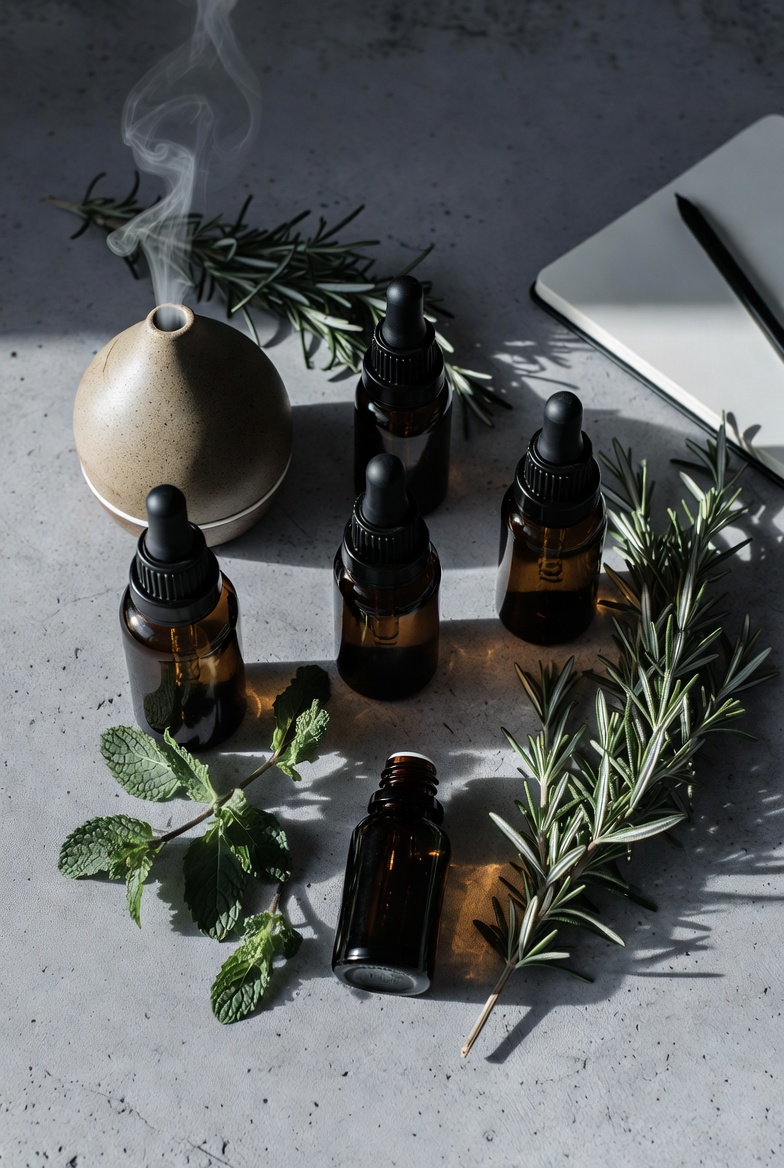
Most people dismiss essential oils as spa accessories; pleasant, perhaps calming, but nothing a serious biohacker would spend time on. That framing is outdated.
The research literature on aromatic compounds and cognitive function has matured significantly over the past decade. We now have peer-reviewed, placebo-controlled human trials demonstrating that specific volatile compounds in essential oils cross the blood-brain barrier, inhibit the same enzymes targeted by Alzheimer’s medications, and produce measurable improvements in memory speed and accuracy. These aren’t fringe studies; they’re published in journals like Therapeutic Advances in Psychopharmacology, Nutrients, and PubMed-indexed neuroscience literature.
None of that means you should replace your nootropic stack with a diffuser. What it does mean is that if you’re leaving the best essential oils for cognitive clarity out of your performance protocol entirely, you’re overlooking a low-cost, zero-side-effect tool with genuinely interesting mechanistic support.
This guide breaks down the neuroscience, ranks the oils with the strongest evidence, and tells you exactly which products on Amazon to buy based on your specific goal.
We also recommend checking out our guide on the Best High Polyphenol Olive Oils for Health and Longevity.
Table of Contents
TheWellnessReview.blog participates in the Amazon Associates program. If you purchase through our links, we may earn a commission at no additional cost to you. All product recommendations are editorially independent and evidence-based.
The Neuroscience of Olfaction and Brain Function
Before getting into individual oils, it’s worth understanding why smell has such a direct line to cognitive function, because the anatomy here is not intuitive.
Every other sensory input (vision, touch, hearing, taste) routes through the thalamus, the brain’s relay station, before reaching the cortex for processing. Olfaction is different. Aromatherapy works by stimulating the olfactory system: upon inhalation, scent molecules travel through the nose to the brain, particularly affecting the limbic system, which directly influences emotions and memory. The olfactory bulb connects directly to the amygdala (emotional processing) and the hippocampus (memory encoding and retrieval), structures that sit at the core of cognitive performance and age-related cognitive decline.
But the mechanism goes beyond emotional influence. Terpenes like 1,8-cineole, a key compound in rosemary essential oil, can enter the bloodstream via the nasal or lung mucosa. As small, fat-soluble organic molecules, terpenes can easily cross the blood-brain barrier. Once in circulation, they can exert direct pharmacological effects on neurotransmitter systems, specifically the cholinergic system, which governs attention, learning, and memory consolidation.
This is the key distinction between aromatherapy as mere mood support versus aromatherapy as a targeted cognitive intervention. The former relies on subjective experience. The latter involves measurable biochemistry.
Regular exposure to scent has a significant impact on brain health and specifically on cognitive function, research on perfumers found structural brain differences between those with extensive scent exposure and untrained individuals, with certain regions showing significantly larger volume in the scent-trained professionals. The implication is provocative: deliberate olfactory enrichment may be a form of neuroplasticity training, not just a way to make your office smell nice.
The 6 Best Essential Oils for Cognitive Clarity: Evidence Ranked
1. Rosemary (Rosmarinus officinalis ct. cineole)

The Most Researched Cognitive Oil, Period
If you could only diffuse one oil for brain performance, the evidence points to rosemary. Specifically, the cineole chemotype, a variety of rosemary with particularly high concentrations of 1,8-cineole (ideally 38–55% of total composition).
The landmark study from the Brain, Performance and Nutrition Research Centre at Northumbria University established the direct pharmacological link: performance on cognitive tasks was significantly related to the concentration of absorbed 1,8-cineole following exposure to rosemary aroma, with improved performance at higher concentrations; findings that cannot be explained by expectancy theory and suggest a direct pharmacological action on the central nervous system.
The mechanism is well-characterized. 1,8-cineole has been the subject of studies suggesting it inhibits acetylcholinesterase (AChE) and butyrylcholinesterase enzymes, important in brain and central nervous system neurochemistry, meaning rosemary components may prevent the breakdown of the neurotransmitter acetylcholine.
The combination with peppermint is particularly potent. Research combining rosemary and peppermint oils showed significant enhancements of memory processing, with both oils elevating BDNF levels in the hippocampus in a dose-dependent manner and improving hippocampal neurogenesis, with anti-amnesic activity enhanced when the two oils were combined versus used individually.
Active Compounds: 1,8-cineole (35–55%), α-pinene, camphor, rosmarinic acid
Best For: Memory encoding, working memory, sustained deep-focus sessions
Delivery: Diffusion; 10–15 minutes during morning work sessions produces the most sustained effect
2. Peppermint (Mentha × piperita)

The Acute Focus & Fatigue Fighter
Peppermint is the “espresso shot” of the essential oils world, fast-acting, reliably stimulating, and supported by a surprisingly deep clinical literature.
In a double-blind, placebo-controlled, balanced cross-over study, peppermint essential oil with high levels of menthol and menthone demonstrated AChE inhibitory, calcium regulatory, and GABAA/nicotinic receptor binding properties, and the highest dose improved performance on the cognitively demanding Rapid Visual Information Processing task at 1 hour and 3 hours post-dose, while both doses attenuated fatigue and improved serial subtraction performance at 3 hours.
At the cellular level, peppermint’s effects on hippocampal function are striking. Research in an Alzheimer’s disease mouse model found that sniffing peppermint essential oil improved learning and memory ability, with neurons in the hippocampal CA1 region returning to normal compared to controls, and amyloid-beta deposition decreasing alongside significant reductions in oxidative stress markers.
The key compound is menthol, but not in isolation. The full essential oil produces synergistic effects across its composite volatile fraction that isolated menthol alone cannot replicate.
Active Compounds: Menthol (40–55%), menthone (15–25%), 1,8-cineole (~5%)
Best For: Acute mental fatigue, afternoon cognitive slumps, pre-work or pre-study activation
Delivery: Diffuse for 5–10 minutes or apply 1 drop to the inside of wrists and inhale; effects onset quickly
3. Frankincense (Boswellia carterii / B. sacra)

The Neuroprotective Long-Game Oil
Where rosemary and peppermint shine for acute cognitive activation, frankincense plays a different role: long-term neuroprotection and neuroinflammation reduction.
The main ingredients of frankincense resin, incensole acetate and boswellic acids, have anti-inflammatory effects that can decrease nervous system degeneration, and laboratory studies using animal models found that boswellic acid caused inhibition of inflammatory precursors in the brain; immunohistochemical studies showed that patients with memory disorders had inflammation in certain brain areas, and prescribed anti-inflammatory drugs prevented memory loss in those patients.
For longevity-focused biohackers, this neuroinflammation angle is significant. Chronic low-grade neuroinflammation, driven by elevated NF-κB signaling, microglial activation, and oxidative stress, is increasingly recognized as a core driver of age-related cognitive decline. Boswellic acids, particularly AKBA (3-acetyl-11-keto-β-boswellic acid), are potent 5-LOX (5-lipoxygenase) inhibitors that suppress this inflammatory cascade.
Frankincense also produces a grounded, focused mental state without stimulation, making it ideal for meditation, deep reading, or any work requiring calm, sustained attention rather than activated energy.
Active Compounds: Boswellic acids (incensole acetate, AKBA, KBA), α-pinene, limonene
Best For: Stress-related brain fog, neuroinflammation reduction, calm sustained focus, meditation
Delivery: Diffuse 2–3 drops; or apply 1 drop diluted in carrier oil to temples and back of neck
4. Lemon (Citrus limon)

The Mood-Cognitive Interface Oil
Lemon essential oil’s cognitive effects operate primarily through the dopaminergic and serotonergic systems, the mood-cognition interface, rather than the cholinergic pathway that rosemary and peppermint target.
Bergamot and lemon oils affect mood and cognitive function through their influence on the release of dopamine and serotonin, enhancing mood and mental clarity, with lemon oil particularly known for its ability to increase concentration and alertness through limonene and pinene components that improve neurotransmitter activity.
This mood-cognition pathway matters more than many people realize. Cognitive performance, particularly working memory capacity, executive function, and creative problem-solving, degrades under negative mood states. Lemon oil’s rapid mood-brightening effect creates the neurochemical conditions under which cognitive performance is naturally optimized.
Active Compounds: d-Limonene (~70%), β-pinene, γ-terpinene, citral
Best For: Motivation deficits, mood-dependent brain fog, creative work, morning routine activation
Delivery: Diffuse in workspace; note that cold-pressed lemon oil is phototoxic, avoid skin application before sun exposure
5. Eucalyptus (Eucalyptus globulus or E. radiata)

The Cerebral Blood Flow & Oxygenation Oil
Eucalyptus operates through a distinct mechanism from the other oils on this list; its primary cognitive benefit comes from increased cerebral oxygenation rather than direct neurotransmitter modulation.
Eucalyptus contains eucalyptol (1,8-cineole), which has been found to increase cerebral blood flow, thereby enhancing brain performance and reducing mental fatigue, and its ability to open the airways allows for better oxygen flow, which is crucial for brain function and can lead to increased alertness and improved overall cognitive performance.
Eucalyptus also shares the 1,8-cineole compound with rosemary, meaning it carries some overlapping AChE-inhibitory potential alongside its vascular effects. E. radiata is generally preferred over E. globulus for home diffusion; it has a softer, more complex aroma with comparable active compound levels and is better tolerated for extended use.
Active Compounds: 1,8-cineole (60–80%), α-pinene, limonene
Best For: Brain fog related to poor oxygenation, afternoon slumps, blending with rosemary for synergistic cineole effect
Delivery: Diffuse 3–4 drops; pairs exceptionally well with peppermint (2:1 eucalyptus to peppermint)
6. Lavender (Lavandula angustifolia)

The Anxiety-Cognition Balancer
Lavender belongs on this list for a reason that is counterintuitive for many biohackers: anxiety suppresses cognition. Elevated cortisol and sympathetic nervous system activation directly impair prefrontal cortex function, the seat of working memory, planning, and executive control.
Lavender is generally well-tolerated and has proven calming effects on the central nervous system, and research supports its role in helping the brain stay alert without going into overdrive, with the best approach often being to calm the nervous system first so the brain can maintain alert focus rather than entering fight-or-flight responses.
For biohackers who run hot, high cortisol, anxiety-driven brain fog, and difficulty transitioning into deep focus, lavender may be the missing piece. It’s not a stimulant. It’s a cognitive environment optimizer. Use it in the evening to wind down the nervous system and consolidate the day’s learning, or in a blend with rosemary when anxious activation is counterproductive.
Active Compounds: Linalool (25–38%), linalyl acetate (25–45%), 1,8-cineole (trace)
Best For: Anxiety-related brain fog, evening cognitive wind-down, study review sessions, stress-impaired focus
Delivery: Diffuse 3–4 drops; also effective as a pillow spray or 1–2 drops on wrists before sleep
The Science of Acetylcholine: Why This One Neurotransmitter Matters for Everything
To understand why several essential oils are genuinely interesting from a longevity and cognitive performance standpoint, you need to understand acetylcholine (ACh), arguably the most important neurotransmitter for learning and memory.
ACh is synthesized in the basal forebrain and projected widely through the cortex and hippocampus. It facilitates synaptic plasticity, the strengthening of neural connections during learning, and supports working memory, sustained attention, and information encoding. ACh levels naturally decline with age. The accelerated loss of cholinergic neurons is one of the defining features of Alzheimer’s disease.
The enzyme that breaks down acetylcholine is acetylcholinesterase (AChE). Inhibiting AChE, allowing ACh to remain in the synapse longer, is the mechanism of action behind the most widely prescribed Alzheimer’s drugs (donepezil, rivastigmine, galantamine).
The remarkable finding from essential oil research is that several aromatic compounds appear to inhibit AChE through a similar pathway:
Increase the numerator, or decrease AChE activity, and effective ACh availability rises. Rosemary’s 1,8-cineole, peppermint’s menthol, and frankincense’s boswellic acids, each have demonstrated AChE-inhibitory properties in peer-reviewed research, to varying degrees. That does not make them equivalent to pharmaceuticals. But it does make the mechanism biologically plausible and worth taking seriously.
Quality Standards & What “Therapeutic Grade” Actually Means
This section separates the biohacker from the casual wellness consumer. The cognitive effects described in the research above were demonstrated with high-purity, unadulterated essential oils containing verified concentrations of active compounds. Grocery store oils and synthetic fragrance oils will not replicate these effects.
Here’s what to look for:
GC/MS Testing (Gas Chromatography/Mass Spectrometry): This is the non-negotiable quality marker. GC/MS testing verifies the exact chemical composition of an oil, including its key active compounds and the absence of adulterants, solvents, or diluents. Any brand worth buying makes these reports publicly available or accessible by batch number.
Chemotype Specificity: For rosemary, the label should specify ct. cineole, this tells you the chemotype, which determines the chemical profile. Rosemary ct. camphor and rosemary ct. verbenone have significantly different compound ratios and different effects.
Origin and Distillation Method: Steam distillation preserves volatile aromatic compounds without introducing solvent residues. Cold pressing is appropriate for citrus oils. Solvent extraction is generally undesirable for therapeutic use.
“Therapeutic Grade” Is Not a Regulated Term: Any company can print it on a label. It means nothing without accompanying GC/MS documentation. The most important quality factor is that essential oils are free of synthetic ingredients, chemical fillers, additives, or dilutions — verified through independent third-party GC/MS testing, with results made publicly available to consumers.
The brands that meet these standards and are available on Amazon: Plant Therapy, Edens Garden, NOW Foods (for their certified organic line), and Rocky Mountain Oils. All four use third-party GC/MS testing and publish results.
The 5 Best Essential Oil Products for Cognitive Clarity on Amazon
1. Plant Therapy Rosemary 1,8-Cineole Organic Essential Oil

Best For: Deep Work, Memory Encoding & the Rosemary Protocol
Plant Therapy is among the most rigorous brands available on Amazon; their essential oils are sourced from reputable suppliers, third-party tested for purity and potency, free of additives, adulterants, or dilutions, and some of their oils are USDA Organic certified. Their Rosemary 1,8-Cineole is the specific chemotype used in cognitive research, making it the most direct translation of the clinical literature into a consumer product.
Look for the 10 mL or 30 mL bottle. GC/MS reports are available on their website by batch number. USDA Organic certification eliminates pesticide contamination concerns.
Active Compound Target: 1,8-Cineole at 38–55%
Size/Format: 10 mL, 30 mL
Best For: The primary workhorse of a cognitive clarity protocol
2. NOW Foods Mental Focus Essential Oil Blend

Best For: Pre-Made Synergy Blend for Focus & Productivity
NOW Foods’ Mental Focus Oil Blend consists of lemon, peppermint, wintergreen, basil, rosemary, and grapefruit oils, created through natural distillation and cold-pressed processes, a ready-to-diffuse synergy blend targeting concentration and clarity.
This is the most accessible entry point for someone who wants the benefits of multiple evidence-backed cognitive oils without managing individual bottles. NOW Foods conducts GC/MS testing in-house and is widely available on Amazon. The blend is child-resistant, capped, and vegan.
The combination of rosemary (cineole pathway), peppermint (cholinergic + fatigue reduction), lemon (dopaminergic mood), and grapefruit (motivational uplift) in a single bottle covers the primary cognitive enhancement mechanisms described in this post.
Size/Format: 1 oz (approximately 600 drops)
Best For: Workspace diffusion, daily cognitive routine, those new to essential oil protocols
3. Edens Garden Energy & Focus Roll-On Blend

Best For: On-the-Go Cognitive Activation & Travel
The Edens Garden Energy & Focus blend includes essential oils known for their energizing and stimulating properties, peppermint, rosemary, and lemon, and is available as a pre-diluted roll-on formulated for direct skin application without carrier oil. Edens Garden ensures every oil is 100% pure, free of synthetics, and ethically sourced. GC/MS batch testing is standard practice for the brand.
The roll-on format is specifically valuable for mobile use, applied to pulse points (wrists, behind the ears, base of the neck) for inhalation throughout the day. For professionals, students, or anyone who needs cognitive support outside a home diffusion setup, this is the most practical delivery format.
Size/Format: Pre-diluted 10 mL roll-on
Best For: Office use, travel, pulse-point application, daytime focus support without a diffuser
4. Plant Therapy Frankincense Serrata Organic Essential Oil

Best For: Neuroprotection, Anti-Neuroinflammation & Meditation Focus
Plant Therapy’s Frankincense Serrata (Boswellia serrata) is the most cost-accessible true frankincense available on Amazon with documented GC/MS testing. Boswellia serrata is one of the most extensively studied species for boswellic acid content, the anti-inflammatory compounds most relevant to the neuroinflammation literature discussed above.
Combine with rosemary in a diffuser blend (2 parts frankincense, 1 part rosemary) for a protocol that addresses both acute cognitive activation and long-term neuroprotective signaling simultaneously. The grounding, resinous aroma also makes it ideal for focused meditation practices, which have their own independent cognitive benefits.
Active Compounds: Boswellic acids, α-thujene, α-pinene, incensole acetate
Size/Format: 10 mL, 30 mL
Best For: Long-term cognitive protection, evening use, meditation, anti-neuroinflammation stack
5. Plant Therapy Peppermint Organic Essential Oil

Best For: Acute Focus, Fatigue Reversal & Rosemary Synergy Blending
A standalone, high-menthol peppermint oil completes the essential cognitive clarity toolkit. Plant Therapy’s organic peppermint consistently tests at 40–55% menthol, the concentration range used in clinical research. This single-oil format allows you to build your own diffuser blends at precise ratios, and to use peppermint independently for acute fatigue or as an inhaler application.
The rosemary + peppermint combination is specifically validated by research: the combined rosemary and peppermint oil protocol produced greater memory enhancement than either oil used alone, with the combination elevating hippocampal BDNF levels in a dose-dependent manner and improving long-term memory in both preventive and therapeutic conditions. Journée Mondiale
Active Compounds: Menthol (40–55%), menthone (14–32%)
Size/Format: 10 mL, 30 mL
Best For: Acute fatigue, afternoon slumps, synergy blending with rosemary, pre-work inhalation
Delivery Methods & Cofactors: Maximizing Absorption and Effect
The oil is only as effective as its delivery method. Here’s how to optimize each format:
Ultrasonic Diffusion is the gold standard for cognitive use. Cold-water ultrasonic diffusers disperse essential oil molecules as a fine mist without heat; heat degrades volatile compounds and alters the chemical profile. Run for 30–60 minutes in a closed workspace (approximately 100–150 sq ft), then allow the room to air out. Continuous diffusion for hours on end produces olfactory adaptation; your brain stops registering the scent, and the effect attenuates.
Personal Inhalation (inhaler sticks or direct wrist application) bypasses diffusion entirely and delivers a concentrated dose on demand. Add 10–15 drops to a blank personal inhaler insert (available on Amazon); inhale deeply through one nostril, hold 3–4 seconds, exhale slowly. This format is particularly well-suited to the acute-use oils (peppermint, rosemary) immediately before demanding cognitive tasks.
Topical Application works through both dermal absorption and proximity-to-nose inhalation. Always dilute to 2–3% in a carrier oil (jojoba, fractionated coconut) before skin contact. Apply to pulse points: inside wrists, behind ears, temples, and base of the skull. For oils with strong evidence of systemic absorption (rosemary’s 1,8-cineole has been detected in blood plasma following topical application), this is not merely an aromatic delivery.
Cofactors that amplify the effect:
- Hydration: Aromatic compounds diffuse more effectively in a well-hydrated mucosal environment. Being dehydrated mutes olfactory sensitivity.
- Ventilation: A stuffy, CO₂-rich environment blunts cognitive performance independently of any oil. Fresh air + essential oil diffusion is synergistic.
- Consistent timing: Using the same oil in the same context repeatedly creates a conditioned cognitive cue; the scent itself begins to trigger the focused mental state through classical conditioning, adding a behavioral layer on top of the pharmacological one.
Cognitive Clarity Protocols: How to Actually Use These Oils
Protocol 1: The Morning Activation Stack (15 minutes)
Diffuse 2 drops Plant Therapy Rosemary + 2 drops Plant Therapy Peppermint in your workspace while completing your first 15 minutes of focused work. This window corresponds with peak cortisol and the highest natural acetylcholine tone of the day, the oils amplify an already favorable neurochemical state.
Protocol 2: The Afternoon Reset (5 minutes)
The 2–3 PM post-lunch dip is driven by adenosine accumulation and a natural cortisol trough. Apply the Edens Garden Energy & Focus roll-on to both wrists and inhale deeply 3–4 times. Follow with 5 minutes of peppermint diffusion. This replaces a second cup of coffee for many people, without the associated adenosine rebound later in the evening.
Protocol 3: The Evening Neuroprotection & Memory Consolidation Protocol
Diffuse 3 drops Frankincense + 2 drops Lavender for 30–45 minutes during the two hours before sleep. Memory consolidation occurs primarily during slow-wave sleep, reducing neuroinflammatory load (frankincense) and cortisol-driven nervous system activation (lavender) in the hours before sleep optimizes the consolidation window. This is the long-game protocol, effects compound over weeks rather than delivering immediate acute results.
Protocol 4: The Pre-Task Focus Sprint
3 drops Rosemary 1,8-cineole in a personal inhaler, used for 5–6 deep inhalations immediately before a cognitively demanding task (writing, analysis, studying, high-stakes conversation). This translates most directly from the clinical research paradigm, which typically assessed subjects 20–40 minutes after a concentrated aromatic exposure.
Final Recommendation: Exactly What to Buy Based on Your Needs
For the complete starter protocol with maximum scientific support: Buy Plant Therapy Rosemary 1,8-Cineole Organic + Plant Therapy Peppermint Organic as your two foundational oils. These two, combined, are backed by more peer-reviewed research than anything else in this category. Diffuse them together at 2:1 ratio of rosemary to peppermint during morning work sessions. Add Plant Therapy Frankincense Serrata Organic for evening use to address neuroinflammation and support memory consolidation overnight.
For convenience and simplicity, the NOW Foods Mental Focus Blend gives you a scientifically informed multi-oil combination in a single bottle at a low price point. It’s not the most optimized protocol, but it’s an effective, accessible entry point that beats doing nothing.
For professional or travel use: The Edens Garden Energy & Focus Roll-On is the most portable, practical option for anyone who can’t run a diffuser at their desk. Apply it, wear it, and let the proximity inhalation do its work throughout the day.
The non-negotiable: Regardless of which products you buy, verify GC/MS test results for every oil you purchase. The research on these compounds is real, but it was conducted with chemically verified oils, not with whatever happens to be cheapest on Amazon. Purity is not optional here. It’s the entire mechanism.
Was this article helpful? Read one of these next:


Leave a Reply